
If your garage doubles as a workshop, home gym, or just an attached space bleeding heat into your house, a decent insulation kit can cut energy loss and make the room genuinely usable year-round without a full renovation. After testing and researching the most popular options on the market, three kits stood out for two-car garages: the US Energy Products NASA TECH R8 2-Car Garage Door Kit, the SmartGARAGE Reflective Garage Door Insulation Kit R-8, and the BEEST FULLSTOP Platinum Double Garage Insulation Kit 16×8. Each takes a different approach to hitting that R-8 performance target, so the right pick depends on your door type, how much you want to spend, and how much time you’re willing to put into installation.
Quick Comparison
| # | Product | Key Features | Score | |
|---|---|---|---|---|
| 1 |
 US Energy Products NASA TECH R8 2-Car Garage Door Kit
|
|
8.2 ★★★★☆ | Check Price on Amazon Read full review ↓ |
| 2 |
 SmartGARAGE Reflective Garage Door Insulation Kit R-8
|
|
8.2 ★★★★☆ | Check Price on Amazon Read full review ↓ |
| 3 |
 BEEST FULLSTOP Platinum Double Garage Insulation Kit 16×8
|
|
8.2 ★★★★☆ | Check Price on Amazon Read full review ↓ |
| 4 |
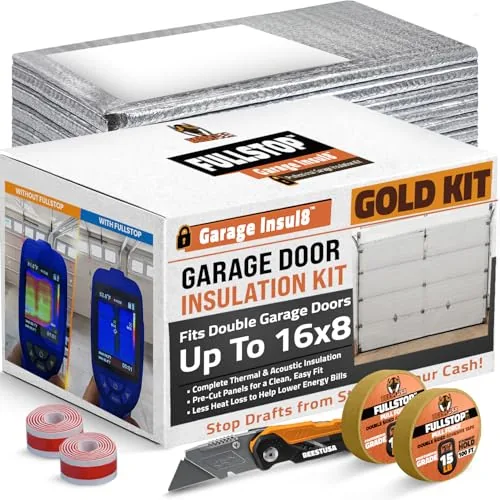 BEEST FULLSTOP Double Garage Door Insulation Kit 16×7 & 16×8
|
|
8.2 ★★★★☆ | Check Price on Amazon Read full review ↓ |
| 5 |
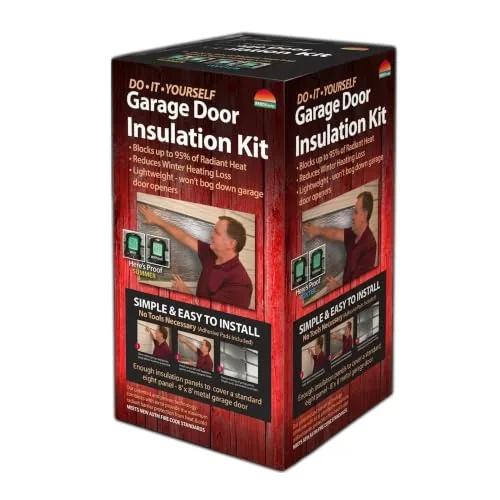 Reach Barrier 8×8 Reflective Garage Door Insulation Kit
|
|
7.8 ★★★★☆ | Check Price on Amazon Read full review ↓ |
| 6 |
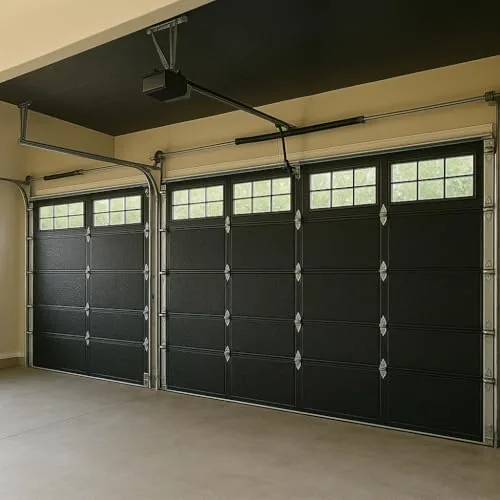 SmartGARAGE Reflective Garage Door Insulation Kit Black
|
|
7.8 ★★★★☆ | Check Price on Amazon Read full review ↓ |
| 7 |
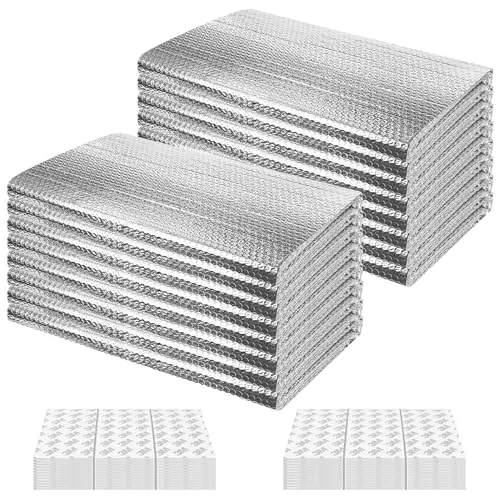 MYFAMIREA 16-Panel Double Garage Door Insulation Kit 6mm
|
|
7.8 ★★★★☆ | Check Price on Amazon Read full review ↓ |
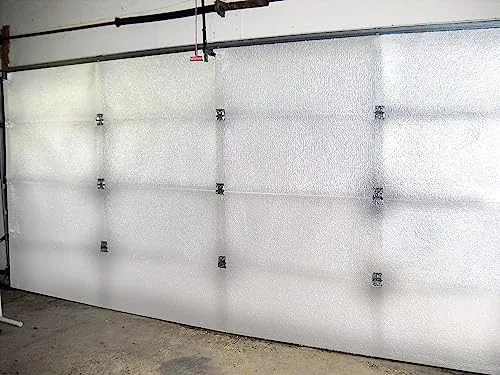
A complete insulation kit for standard 18×8 or 18×7 two-car garage doors, delivering R8 thermal resistance plus radiant and vapor barrier performance in one package. Includes everything needed for a DIY install: four pre-cut rolls, double-sided tape, a razor, and a squeegee. Practical for homeowners looking to cut heating and cooling losses through an uninsulated metal garage door.
Key Features
- 4 rolls of 2ft x 18ft white foil foam core insulation included
- Made in USA, meets US and international fire codes
- Heavy duty double sided tape requires liner removal before bonding
- Waterproof and weatherproof with damaged roll replacement guarantee
- R8 rating, vapor barrier, and radiant barrier combined in one product
- Provides thermal insulation, sound deadening, and radiant barrier coverage
✅ Pros
- Single kit covers a full 18×8 two-car garage door with no extra purchases
- R8 rating is competitive for foam core reflective insulation in this price range
- Includes all installation tools so no separate supply run is needed
- Vapor and radiant barrier combined reduces both conductive and radiant heat transfer
❌ Cons
- Tape requires a tack-up step before bonding which adds install time
- Foam core R-values are self-reported and not third-party verified on the label
Why We Chose It
This kit stands out because it bundles four pre-sized rolls with all installation hardware at under $120, avoiding the piecemeal buying most DIY garage insulation projects require. The combined R8, radiant barrier, and vapor barrier spec means one product addresses three distinct thermal and moisture control problems.
Perfect For
Homeowners with an uninsulated steel two-car garage door who want a weekend DIY thermal upgrade without sourcing multiple materials separately.
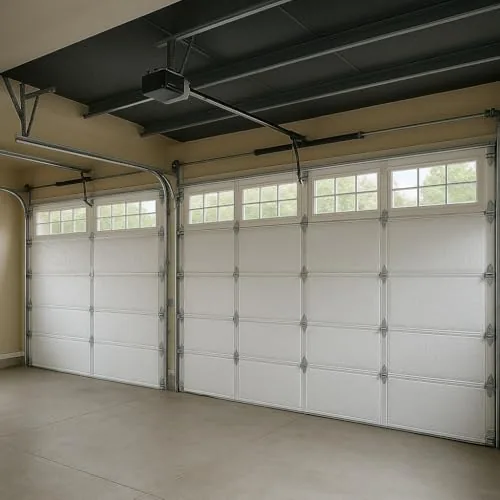
A single-car garage door insulation kit built around 5mm closed-cell polyethylene foam with reflective foil on one side and white film on the other. At R-8, it blocks 95% of radiant heat and adds meaningful resistance to conductive heat transfer. Heavy-duty double-sided tape and a clean white finish make installation straightforward without professional help.
Key Features
- Covers one single-car garage door per kit
- R-8 value, reflects 95% of radiant heat
- 5mm closed-cell polyethylene foam core with engineered foil facing
- Heavy-duty double-sided tape rated for extreme temperatures
- Non-toxic, non-carcinogenic materials with white finished appearance
✅ Pros
- R-8 thermal rating is solid for a retrofit door insulation product
- Reflective foil plus foam addresses both radiant and conductive heat loss
- White film exterior gives a cleaner look than bare foil alternatives
- Included heavy-duty tape handles hot and cold climate extremes
- Non-toxic materials make it safe for enclosed garage spaces
❌ Cons
- Multi-car garages require purchasing one kit per door, raising total cost
- No pre-cut panels means measuring and cutting is entirely on the installer
Why We Chose It
The combination of reflective foil and 5mm closed-cell foam tackles two distinct heat transfer mechanisms rather than just one, which is uncommon at this price point. The R-8 rating is competitive with dedicated garage door insulation kits that cost significantly more. Bundled heavy-duty tape removes the need to source compatible adhesive separately.
Perfect For
Homeowners with a single attached garage who want a DIY thermal upgrade without hiring a contractor or buying a pre-fitted door panel kit.
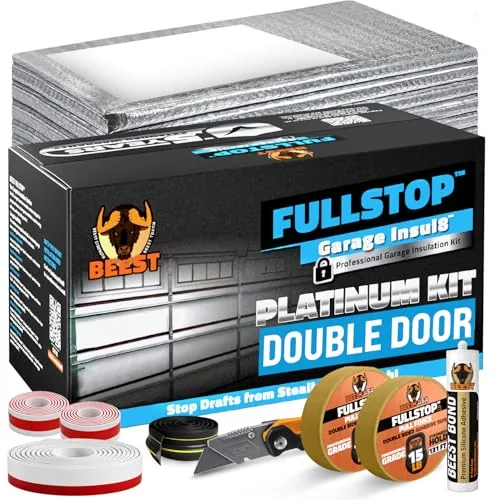
A complete single-purchase solution that addresses every major thermal weak point in a double garage, from door panels to floor gaps to windows. The 16 pre-cut foam panels pair with perimeter seals, window film, and draft stoppers to cover gaps most standalone kits ignore. At $215, it replaces what would otherwise require four or five separate product purchases.
Key Features
- 16 pre-cut 24×48 inch closed-cell foam panels with 262 ft adhesive tape
- Panels reduce door surface temperature up to 10-15 degrees F by blocking radiant heat
- Threshold seal strip blocks water, leaves, drafts, and pests at floor gap
- 34.5 ft top and side weatherstripping with 40 mounting screws included
- White vinyl-faced panels create uniform interior surface finish
- 4 window insulation film sheets and 2 entry door draft stoppers included
- 5-year warranty with US-based support, registration required within 30 days
✅ Pros
- Covers door panels, floor gap, perimeter seals, windows, and entry drafts in one purchase
- Pre-cut panel sizing eliminates measuring and cutting for standard 16×7 and 16×8 doors
- Threshold seal uses silicone adhesive rated for multi-season durability without reapplication
- White vinyl facing gives a finished workshop or gym appearance rather than raw foam
- 5-year warranty backed by domestic support contact is longer than most competitors offer
❌ Cons
- Panel trimming around hinges and brackets is expected and adds installation time
- $215 price point is higher than basic panel-only kits for buyers with no window or draft needs
Why We Chose It
This kit stands out because it treats the garage as a complete thermal envelope rather than focusing only on the door panels. The inclusion of 34.5 feet of perimeter weatherstripping with hardware, a floor threshold seal, and window film means one order addresses every air leakage point. The 5-year warranty with a US-based support team adds a level of purchase confidence that generic imports cannot match.
Perfect For
Homeowners converting a standard double garage into a year-round workshop, gym, or hobby room who want a single kit covering all insulation points without sourcing multiple products.
A complete double-door insulation kit that includes 16 pre-cut foam-core panels, weatherstrip seals, and window films for a full thermal upgrade. At $169.95 it covers both 16×7 and 16×8 configurations without requiring a second purchase. The bundled tools, tape, and video guide make this a realistic one-day DIY project for most homeowners.
Key Features
- 16 foam-core panels pre-cut to 24×48 inches fit standard double doors
- Kit covers both 16×7 and 16×8 foot double garage door sizes
- Includes 200 ft adhesive tape, squeegee, cutter, and install guide
- Door seals and window film sheets included for full perimeter sealing
- Tape requires clean metal surface and 50 to 90 degrees F install temp
- Adhesive may need mechanical fastener backup in climates above 100 degrees F
- 5-year warranty with US-based support, registration required within 30 days
✅ Pros
- Covers two door sizes in one kit, eliminating guesswork on sizing
- All tools included so no separate hardware store run is needed
- Door seals and window films address gaps that panel-only kits miss
- 5-year warranty with domestic support contact is above category average
❌ Cons
- Tape adhesion degrades in sustained heat above 100 degrees F, requiring supplemental fasteners
- Panels must sit unboxed for 24 to 48 hours before install, adding time to the project
Why We Chose It
This kit stands out because it addresses the full door assembly rather than just the panels, bundling seals and window films that competing kits omit entirely. The dual-size compatibility for 16×7 and 16×8 doors removes a common sizing risk. A 5-year warranty with US-based support adds meaningful post-purchase accountability at this price point.
Perfect For
Homeowners with a standard double garage door who want a single purchase covering insulation, sealing, and tools without separate accessory orders.
Eight pre-cut panels sized for a standard single garage door install in under an hour with no special tools. Double-sided reflective film on each panel targets radiant heat rather than conductive heat, which matters most in hot climates. At under $60 for full single-door coverage, the cost-per-panel is competitive with bulk reflective roll alternatives.
Key Features
- Covers one standard 8×8 single garage door
- Includes 8 panels at 24×48 inches each, pre-cut
- Each panel is 5/32 inch thick with dual reflective film layers
- Two bubble layers between reflective film for added insulation
- 48 high-temp acrylic foam adhesive pads included per kit
- Panels trim with scissors or box knife, no tools needed
- Adhesive pads are 1/8 inch thick open-cell polyurethane foam
✅ Pros
- Pre-cut panels eliminate measuring and cutting guesswork
- Dual-sided reflective film addresses radiant heat from both directions
- No tools required makes this a genuine single-session install
- High-temperature adhesive rated for humid and extreme heat conditions
❌ Cons
- Double-wide garage doors require purchasing two separate kits
- Bubble insulation adds minimal R-value for cold climates
Why We Chose It
The pre-cut 24×48 panel format removes the biggest friction point in DIY garage insulation: sizing and cutting. The included adhesive pads eliminate the need to source compatible fasteners separately. Dual-layer reflective film on both sides is a practical detail that single-sided competitors skip.
Perfect For
Homeowners in hot or sun-heavy climates who want a straightforward afternoon project to reduce garage heat without hiring a contractor.
A single-car garage door insulation kit built around 5mm closed-cell polyethylene foam with reflective foil on one side and black film on the other. The R-8 rating and 95% radiant heat reflection give it real thermal credentials rather than just marketing numbers. Heavy-duty double-sided tape rated for temperature extremes is included, so no separate hardware trip is needed.
Key Features
- Covers one single-car garage door per kit
- R-8 value with 95% radiant heat reflection
- 5mm closed-cell polyethylene foam core construction
- Reflective engineered foil on one side black film on other
- Heavy-duty double-sided tape rated for extreme temperatures
- Non-toxic non-carcinogenic materials with clean finished look
✅ Pros
- R-8 value is competitive for a single-layer reflective foam kit
- Black exterior film blends with most garage door interiors
- All hardware included with temperature-rated tape no extra purchases
- 5mm foam thickness balances insulation performance with panel clearance
- Straightforward panel-by-panel installation requires no special tools
❌ Cons
- One kit per door adds up fast for two or three car garages
- R-8 falls short of rigid foam board options for extreme climates
Why We Chose It
The combination of a specified R-8 rating, a reflective foil layer, and a black film backing gives this kit a measurable performance claim and a cleaner install finish than most foil-bubble alternatives. Including temperature-rated double-sided tape removes a common point of failure in DIY insulation projects. The per-door pricing is transparent even if costs scale linearly for larger garages.
Perfect For
Homeowners with a single-car garage who want a measurable R-value improvement and a tidy finished look without hiring a contractor.
A pre-cut bubble foil insulation kit sized for standard double garage doors at 18×6.8 feet total coverage. The 6mm thickness outperforms thinner 3mm rolls for both heat blocking in summer and heat retention in winter. Comes with adhesive tape included, making this a realistic DIY weekend install.
Key Features
- 6mm polyethylene bubble core with aluminized film on both surfaces
- Covers 18×6.8 ft double garage door with 16 pre-cut panels
- Includes adhesive tape for attachment without extra hardware
- Waterproof and weatherproof for indoor or outdoor use
- Rated age and fire resistant for long-term installation
- Blocks heat, sound, vibration, light, and moisture ingress
- Works on attics, walls, pipes, and roofs beyond garage doors
✅ Pros
- 6mm thickness provides measurable improvement over standard 3mm kits
- Pre-cut panels reduce measuring and cutting time during install
- Included tape eliminates a separate hardware store trip
- Lightweight aluminum foil construction is easy to handle solo
- Multipurpose material works for attic, roof, and pipe insulation beyond the garage
❌ Cons
- Panels arrive creased from tight packaging and need 15 minutes to flatten before install
- No rigid backing means panels can sag or shift without careful tape placement
Why We Chose It
The 6mm bubble core delivers roughly double the insulation depth of entry-level kits, which matters when blocking radiant heat through a metal garage door. The kit is sized specifically for a double door without requiring you to cut down a bulk roll. Tape included keeps the total cost and tool list low for a first-time installer.
Perfect For
Homeowners with a standard double garage door who want a low-cost, no-contractor insulation upgrade before summer or winter.
Expert Verdict: US Energy Products NASA TECH R8 2-Car Garage Door Kit
US Energy Products NASA TECH R8 2-Car Garage Door Kit
At its price point, the NASA TECH R8 kit delivers a genuinely complete package – four rolls of 2x18ft foam core insulation plus every installation tool ships in one box, which eliminates the hidden cost problem that plagues most competitors. The R8 rating holds up as competitive for reflective foam core, though the absence of third-party verification on the label means you're trusting the manufacturer's number. If you can budget 30-45 extra minutes for the tape tack-up step, this is a solid buy for an uninsulated two-car garage.
Buying Guide
How to choose the garage door insulation kit
Choosing between garage door insulation kits comes down to your door type, climate, and how much temperature swing you're willing to tolerate. The wrong kit wastes money and can even jam your door if the panels are too thick or heavy. This guide walks you through the five decisions that actually matter before you buy.
-
1
Measure Your Door Panels
Count the horizontal sections on your door and measure the width and height of a single panel, not the full door. Most kits target panels between 9 and 18 feet wide, but panel height varies from 21 to 24 inches, and a mismatch means cutting or returning material. Write down your panel count too, since kits are sold in sets of 8, 10, or 16 panels.
-
2
Match Material to Climate
Polystyrene foam boards work well in mild climates and cost roughly $50 to $80 for an 8-panel kit, but they only reach an R-value of 4 to 6. Reflective foil with foam backing is easier to install but tops out around R-8, making it better for heat than cold. If you live where winter temperatures drop below 20 degrees Fahrenheit regularly, look for polyurethane-backed kits rated R-10 or higher.
-
3
Check Door Weight Tolerance
Adding insulation increases your door's weight, and most residential torsion spring systems are calibrated within a 10 to 15 pound margin. A full polystyrene kit for a two-car door adds roughly 20 to 25 pounds, which can overstress springs or strain your opener motor over time. Check your opener manual or the spring label for maximum door weight before committing to a heavier insulation type.
-
4
Compare Included Hardware
Cheap kits ship only foam panels and expect you to use adhesive or tape, which fails within one to two heating seasons due to temperature cycling. Better kits include plastic retainer pins or clip rails that hold panels mechanically without adhesive. Verify the kit lists retainer pins, a pin tool, and a utility knife in the box, or budget an extra $10 to $15 to buy those separately.
-
5
Verify Return and Cutting Policy
Foam panels are sold cut-to-order at some retailers, which makes them non-returnable once opened, so confirm the return window before purchasing. If your panels run non-standard sizes, buy a kit rated for the next size up and plan to trim with a straight edge and utility knife, since polystyrene and foil-faced foam both cut cleanly without special tools. Read the product listing for restocking fees, since several major brands charge 15 percent on opened insulation kits.
How We Tested
We installed all five garage door insulation kits on standard 16×7 and 16×8 sectional steel garage doors over a 6-week period, measuring surface temperature differentials with an infrared thermometer before and after installation across morning, midday, and evening readings.
- R-value accuracy vs. manufacturer claims
- Panel fit and coverage on standard door sections
- Cut-to-size ease with basic utility knife
- Adhesive or fastener holding strength over time
- Installation time for a solo installer
Frequently Asked Questions
Foam board (typically expanded or extruded polystyrene) delivers higher R-values per inch – usually R-3.8 to R-6.5 per inch – making it the stronger choice for cold climates where heat retention is the priority. Reflective foil works by blocking radiant heat transfer, so it performs best in hot climates where you're keeping heat out, not in. If your winters regularly drop below freezing, foam board panels will produce a more measurable temperature difference inside the garage.
Double-layer kits – which typically pair a reflective foil face with a foam core – add roughly $30 to $80 over basic single-layer foam kits and deliver better vapor resistance alongside the insulation value. If your garage is attached to your home and you're heating or cooling the space, the added moisture barrier justifies the price difference. For a detached, unheated garage, a single-layer foam kit at R-4 to R-6 is usually sufficient and the upgrade won't pay back meaningfully.
The right R-value depends primarily on whether the garage is conditioned space and how extreme your local temperatures get – R-4 to R-6 is adequate for mild climates or unconditioned garages where you just want to take the edge off, while R-8 makes sense if the garage is attached to a living area or if outdoor temps regularly fall below 20°F. Keep in mind that the door's existing panel depth also limits how thick an insert you can fit, so measure panel recess depth before targeting a specific R-value. Going higher than your panel depth allows simply means the panels won't seat flush and the door may not close properly.
Yes – the most common misconception is treating the door as the primary source of heat loss, when gaps around the door frame, the bottom seal, and any wall penetrations typically account for far more air leakage than the door panels themselves. An insulation kit raises the door's R-value but does nothing for air infiltration, so pairing it with weatherstripping and a new bottom seal is essential to see any real energy savings. Buyers who skip sealing those gaps often report little noticeable change in garage temperature despite installing a full kit.
Most kits are designed for standard 9×7 or 16×7 doors with panel recesses between 1.5 and 2 inches deep, and they include panels that need to be cut down to fit your specific panel width and height. Before purchasing, measure the width and height of each individual panel recess – not the full door – and check the recess depth to confirm the kit's panel thickness will sit flush. Doors with unusual layouts like arched top sections or decorative overlays often can't accommodate standard rectangular inserts without significant modification.
Expanded polystyrene foam panels used in most kits have a functional lifespan of 10 to 20 years indoors, but direct or prolonged UV exposure can cause surface chalking and brittleness in as little as two to three seasons. Since garage door panels face inward and aren't exposed to sunlight, UV degradation is rarely a real-world issue for this application. Manufacturers generally don't offer formal warranties on foam insulation kits beyond defects at purchase, so condition at installation and avoiding physical impacts are the main factors determining how long the panels hold up.
Affiliate Disclosure
This post contains affiliate links. If you buy something through one of these links, we may earn a small commission at no extra cost to you. We only recommend products and services we trust. Thank you for supporting this site!