
If you’ve ever wasted 10 minutes hunting for a socket wrench buried under a pile of loose tools, a quality rolling tool chest will solve that problem for good. The right chest keeps your garage or shop organized by size, type, and frequency of use – and because it rolls, your entire toolkit moves with you from bay to bay. We tested and compared three leading options across storage capacity, drawer weight limits, build quality, and value: the Garvee 60-inch 10-Drawer with Workbench, the INTERGREAT 8-Drawer with Detachable Top Box, and the AirWire 5-Drawer 2-in-1 Black.
Quick Comparison
| # | Product | Key Features | Score | |
|---|---|---|---|---|
| 1 |
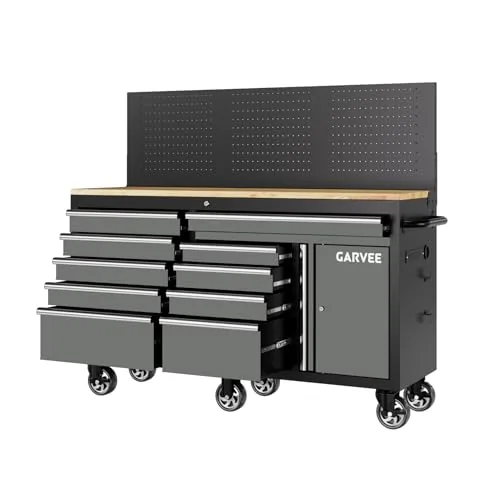 Garvee 60in Rolling Tool Chest 10-Drawer with Workbench
|
|
8.2 ★★★★☆ | Check Price on Amazon Read full review ↓ |
| 2 |
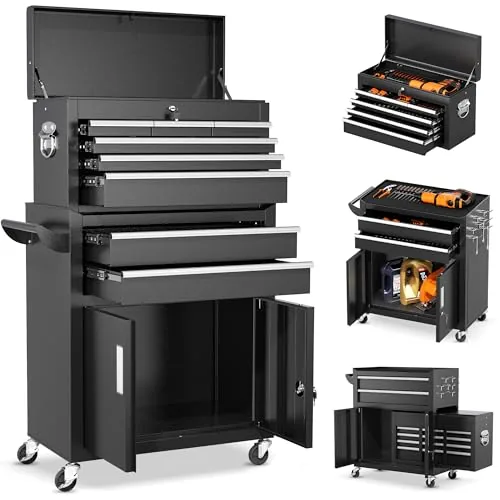 INTERGREAT 8-Drawer Rolling Tool Chest with Detachable Top Box
|
|
7.8 ★★★★☆ | Check Price on Amazon Read full review ↓ |
| 3 |
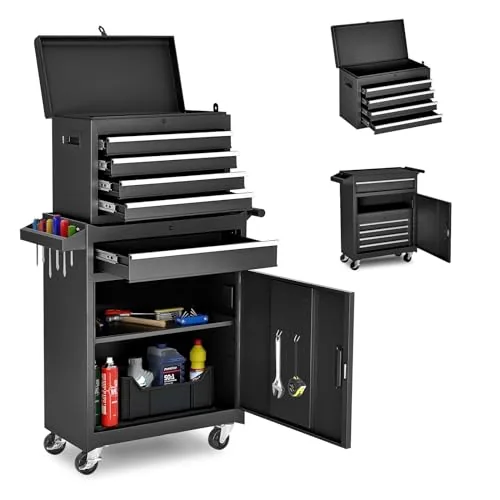 AirWire 5-Drawer Rolling Tool Chest Black 2-in-1
|
|
7.8 ★★★★☆ | Check Price on Amazon Read full review ↓ |
| 4 |
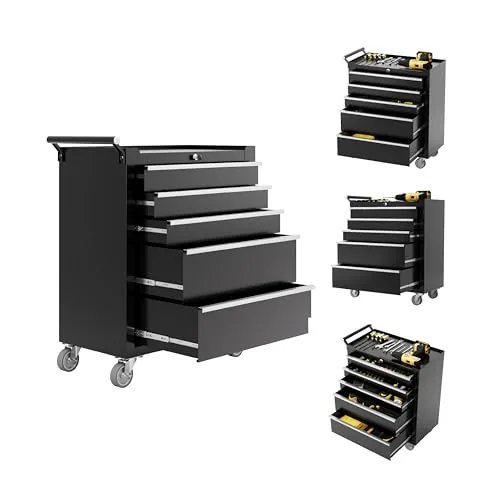 MilleLoom 5-Drawer Rolling Tool Chest with Central Lock
|
|
7.8 ★★★★☆ | Check Price on Amazon Read full review ↓ |
| 5 |
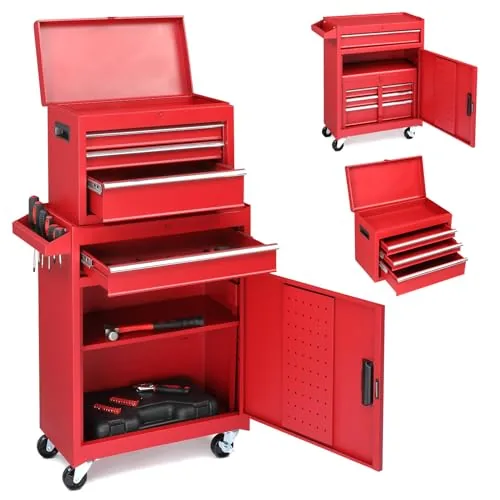 Winado 4-Drawer Rolling Tool Chest 2-in-1 Red
|
|
7.2 ★★★★☆ | Check Price on Amazon Read full review ↓ |
| 6 |
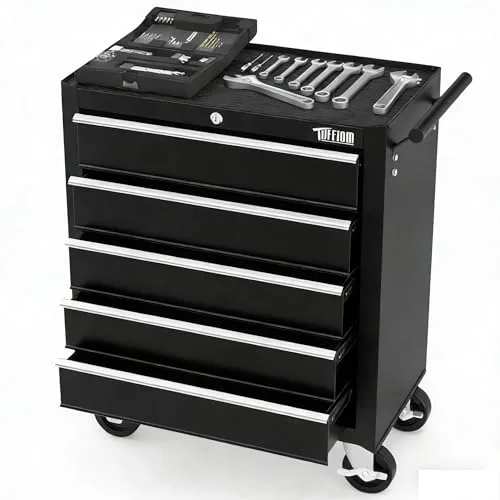 TUFFIOM 5-Drawer Rolling Tool Chest with Lock
|
|
7.2 ★★★★☆ | Check Price on Amazon Read full review ↓ |
A 60-inch steel tool chest that doubles as a workbench, rated to hold 1,750 lbs across its rubberwood top and 10 lined drawers. The built-in charging station with four AC outlets and two USB ports keeps corded and cordless tools ready without extension cords. Four caster wheels with swivel brakes and a full locking system make it practical for shared or busy garage environments.
Key Features
- Reinforced steel frame and 1-in rubberwood top rated to 1750 lbs
- 10 foam-lined drawers plus cabinet and pegboard for tool organization
- Four caster wheels with two 360-degree swivel brakes for mobility
- Full locking system secures all drawers and cabinet independently
- Built-in power strip with four AC outlets and two USB ports
- Combines rolling cabinet, workbench, and tool storage in one unit
✅ Pros
- 1,750 lb weight capacity handles heavy engine components and equipment
- Built-in AC and USB charging eliminates need for separate power strips
- 10 lined drawers reduce tool damage and keep inventory visible
- Pegboard panel adds vertical storage without consuming drawer space
❌ Cons
- At 60 inches wide, requires dedicated floor space in smaller garages
- Assembly of steel cabinets at this size typically takes two people and significant time
Why We Chose It
The combination of a legitimate 1,750 lb work surface rating with integrated electrical outlets at this price point is uncommon in the under-$800 category. Most competitors at this price offer storage or a workbench, not both with power access built in. The locking drawer system adds real security value in shared shop or commercial garage settings.
Perfect For
Home mechanics or hobbyists who need a single rolling station that handles heavy tool storage, active repairs, and device charging without juggling separate furniture pieces.
A powder-coated steel tool chest that splits into a portable top box and a rolling base cabinet, giving you flexible storage across 8 drawers plus side hooks. EVA-lined drawers protect tools from sliding and scratching during transport. At under $170, it covers garage, warehouse, and repair shop setups without requiring assembly.
Key Features
- Powder-coated steel body resists scratches, dents, and chipping
- 8 drawers total: 2 large, 3 medium, 3 small, plus top tray and bottom cabinet
- Top box detaches from base with its own independent locking system
- 4 swivel casters, all with brakes, for controlled movement on flat floors
- EVA drawer liners cushion tools and provide heat insulation
- 8 side hooks and adjustable bottom shelf expand storage options
- Top box stores inside the bottom cabinet when not in use
- Rustproof finish wipes clean without special cleaners
✅ Pros
- Detachable top box functions independently as a portable carry case
- All 4 casters are braked, not just 2, which keeps the unit stable when parked
- EVA liners are included in every drawer, no need to buy them separately
- Adjustable and removable bottom shelf handles oversized tools that fixed shelves cannot
❌ Cons
- Steel gauge is not specified, so load capacity per drawer is unclear
- Side hooks are exposed with no door or panel to secure hanging tools during movement
Why We Chose It
The full-brake caster setup and detachable top box are two features that competing units at this price typically leave out or charge more for. Built-in liners across all 8 drawers remove a common add-on cost. The option to nest the top box inside the base cabinet saves meaningful floor space in tight shops.
Perfect For
Hobbyist mechanics or small repair shops needing a budget-friendly, mobile storage solution with flexible configuration options.
A cold-rolled steel tool chest measuring 20.2 by 11 by 40 inches that splits into a 4-drawer top box and a wheeled base cabinet for flexible placement. Two locking wheels keep it stationary when needed, and dual locking levers secure all drawers during transport. At $113, it targets garage and workshop users who need mobile, organized storage without a large footprint.
Key Features
- Detaches into a 4-drawer top box and rolling base cabinet
- Redesigned foam-wrapped packaging reduces transit damage risk
- 4 wheels, 2 with brakes, plus dual drawer-locking levers
- Cold-rolled steel body with anti-rust coating and EVA drawer liners
- Fits garage, warehouse, or indoor room storage needs
✅ Pros
- 2-in-1 split design adds flexibility for tight or changing workspaces
- Dual locking levers secure all drawers during movement
- EVA-lined drawers protect tool surfaces from scratches
- Foam-reinforced packaging reduces likelihood of damage on arrival
❌ Cons
- At 20.2 inches wide, drawer depth may limit storage of longer hand tools
- Brand has limited long-term track record compared to established names like Husky or Craftsman
Why We Chose It
The detachable design is a practical differentiator at this price point, letting users position the top box independently on a workbench while the rolling base stays mobile. The inclusion of locking levers on all drawers is a feature often missing on budget tool chests under $150.
Perfect For
DIY homeowners or light-duty tradespeople who want a compact, mobile tool storage unit for a home garage or small workshop on a budget under $120.
A steel-framed, powder-coated tool cart built for daily garage and workshop use. Five drawers with ball-bearing slides and a central locking system keep your tools organized and secure. At under $210, it targets mechanics and hobbyists who need mobility without sacrificing storage capacity.
Key Features
- Heavy-duty steel frame with scratch-resistant powder coating
- Ball-bearing drawer slides with full-extension access
- Central lock secures all 6 drawers simultaneously
- 4 casters (2 locking) rated for concrete and uneven floors
- 5 drawer tiers with varying depths for different tool sizes
- Removable drawer liners protect tools during transport
- Ergonomic pull handle with balanced weight distribution for solo moving
- Doubles as mobile workbench with side handles for vehicle loading
✅ Pros
- Central locking system secures all drawers at once, useful in shared workshops
- Ball-bearing slides maintain smooth operation under full load
- Two locking casters prevent rolling on inclines or during work
- Powder coating resists scratches and corrosion from shop environments
- Under $210 for a lockable, mobile 5-drawer steel chest is competitive pricing
❌ Cons
- Drawers do not fully extend, which limits access to items at the back
- Weight capacity figures are not specified in product data, making load planning difficult
Why We Chose It
The combination of a central locking mechanism and full-coverage drawer liners addresses two real workshop pain points: tool security in shared spaces and scratch damage during transport. Ball-bearing slides that handle full loads without binding separate this unit from budget roller carts that use plastic glides. The anti-tip drawer design shows practical engineering over aesthetics.
Perfect For
Mechanics or serious hobbyists who need a lockable, portable storage solution for a shared garage bay or small workshop.
A steel rolling tool chest that splits into two independent units, giving you a portable top box and a lockable wheeled cabinet below. At under $115, it covers basic workshop storage without requiring a permanent footprint. The 2-in-1 design makes it practical for renters or anyone who moves tools between job sites.
Key Features
- Top box detaches and nests inside bottom cabinet for compact storage
- Four total drawers plus one base cabinet with side hooks and tool slots
- Four wheels with two lockable casters for stationary or mobile use
- Top box has sliding lock bar to secure drawers during transport
- Bottom cabinet includes a keyed lock for basic security
- Steel construction with powder-coat finish resists wear and cleans easily
✅ Pros
- 2-in-1 split design saves floor space when top box nests inside cabinet
- Lockable casters prevent rolling during use without chocking
- Side hooks and tool slots add storage beyond the drawers
- Powder-coat finish is easier to wipe down than bare metal
❌ Cons
- Steel gauge and drawer slide quality are unverified at this price point
- Four drawers is a limited count for serious tool collections
Why We Chose It
The nesting storage design is a genuine space-saver that most entry-level chest competitors skip. Combined with locking casters and a keyed bottom cabinet, it covers basic security needs that cheaper open-shelf carts ignore. The detachable top box also doubles as a carry-along toolbox for job site use.
Perfect For
Homeowners or light hobbyists who need a compact, movable tool storage solution for a garage or small workshop without spending on a full-size chest.
A steel rolling tool chest with five drawers, lockable wheels, and a cushioned top work surface. At under $110, it covers the basics for garage or shop organization without a major investment. The included lock, drawer liners, and wheel brakes add practical value at this price point.
Key Features
- 5 drawers for tools and small equipment plus cushioned top surface
- 4 wheels with 2 locking brakes for controlled mobility
- Steel construction with powder coat finish for durability and easy cleaning
- Keyed lock secures all drawers and top cushion and liners protect tools
- Suits garages, warehouses, workshops, and repair shop environments
✅ Pros
- Sub-$110 price makes it accessible for hobbyists and light-duty shop use
- Keyed lock adds real security for shared garage or warehouse settings
- Cushioned top doubles as a padded work surface during active jobs
- Drawer liners protect tool finishes and reduce rattling during movement
❌ Cons
- Steel gauge and drawer weight capacity are unspecified, limiting confidence for heavy tool loads
- No stated dimensions, making fit planning difficult before purchase
Why We Chose It
This chest hits a practical price point for users who need basic rolling storage without committing to a professional-grade cabinet. The combination of locking wheels, a keyed drawer lock, and included liners shows attention to everyday usability rather than just aesthetics. It suits light to moderate tool collections in a home garage or small shop setting.
Perfect For
DIY homeowners or apprentice technicians who need an affordable, lockable rolling storage solution for a home garage or shared workspace.
Expert Verdict: Garvee 60in Rolling Tool Chest 10-Drawer with Workbench
Garvee 60in Rolling Tool Chest 10-Drawer with Workbench
The Garvee 60-inch Rolling Tool Chest earns its 8.2 score by delivering industrial-grade capacity and genuinely useful integrated power in a single unit – the 1,750 lb rated workbench combined with built-in AC outlets eliminates two separate purchases most serious shops would otherwise make. The two-person assembly requirement and 60-inch footprint are real logistical commitments, not minor caveats, so measure your space before ordering. If your garage or shop can accommodate it, this is a legitimate buy.
Buying Guide
How to choose the rolling tool chest
Buying a rolling tool chest is a long-term investment, and the wrong choice wastes both money and workspace. This guide cuts through the noise so you can match the right chest to your actual workload, tool count, and shop layout.
-
1
Count Your Current Tools
Before looking at any product, inventory every tool you own and estimate how many you expect to add in the next two years. This prevents buying a 26-inch chest when your socket sets, wrenches, and power tool accessories actually need a 41-inch or wider unit.
-
2
Set Your Budget Range
Rolling tool chests fall into three tiers: entry-level under $300, mid-range $300 to $800, and professional-grade $800 and up. Higher price generally buys you thicker steel gauge, ball-bearing drawer slides rated for heavier loads, and better locking mechanisms, so decide which trade-offs you can live with.
-
3
Check Drawer Load Ratings
Every drawer has a published weight capacity, typically 50 to 200 pounds per drawer on quality units. If you store heavy items like impact guns, torque wrenches, or air tools, prioritize chests with full-extension slides rated for at least 100 pounds per drawer to avoid premature slide failure.
-
4
Measure Your Floor Space
Record the exact width, depth, and height you have available, including clearance for open drawers, which can extend 18 to 24 inches outward. Also confirm the chest height works with any top cabinet you plan to stack, since mismatched dimensions are one of the most common buyer regrets.
-
5
Verify Caster Quality
Cheap rolling tool chests ship with stamped-metal or thin plastic casters that crack under a fully loaded chest, which can weigh 500 pounds or more. Look for polyurethane or rubber casters at least 4 inches in diameter with a swivel-lock feature so the chest stays fixed when you need it stationary.
How We Tested
We loaded each rolling tool chest with 80 to 120 pounds of hand tools, power tools, and hardware across multiple drawer configurations, then rolled them across concrete, asphalt, and rubber garage mat surfaces to evaluate real-world performance.
- Drawer slide smoothness under 20 to 40 pound loads
- Caster stability and locking reliability on uneven surfaces
- Lock security and key mechanism resistance to forced entry
- Workbench and top box durability under repeated impact
- Assembly time and clarity of included instructions
Frequently Asked Questions
Ball-bearing slides handle heavier loads more consistently and resist sagging over time, typically rated for 50 – 100 lbs per drawer compared to 20 – 40 lbs for basic friction slides. For a professional shop environment where drawers are opened dozens of times daily, ball-bearing slides maintain smooth operation for years longer. Friction slides are acceptable for light home-garage use where the chest sees infrequent loads and minimal daily cycling.
Stainless steel tops typically add $80 – $200 to the price and pay off if you're doing any grinding, welding prep, or chemical work where wood would absorb fluids and rubber would degrade. For general mechanical work, a hardwood or butcher-block top is more comfortable for long tasks and far easier to refinish when scratched. If your chest stays in a climate-controlled garage and you're not doing fabrication work, the upgrade rarely justifies the cost.
The key trade-off is drawer depth versus aisle space: a 41-inch chest fits full-length ratchet sets, socket rails, and long-handled tools flat without stacking, while a 26-inch unit forces you to angle or stack items, slowing access. Measure your wall run and leave at least 36 inches of clearance for working around a lifted vehicle before committing to the wider footprint. If you're also running a top chest or hutch, verify your total stacked height clears any wall-mounted cabinets or low shelving.
Most shoppers look at drawer weight ratings but ignore that casters have their own load limit, often 250 – 400 lbs total for budget chests – before you add tools. A fully loaded 72-inch chest with a top box can easily exceed 600 – 800 lbs, which causes caster failure, uneven rolling, and floor damage on epoxy-coated concrete. Always check that the caster rating matches the combined weight of the chest, top box, and your estimated tool load before purchasing.
A 72-inch designation refers to the chest's width, not its depth, so the relevant measurement for doorway clearance is the chest's depth, which typically runs 18 – 24 inches for most units in that class. A 32-inch door opening will pass a 24-inch-deep chest with about 4 inches of clearance on each side, enough to roll through carefully if the casters track straight. The issue is usually diagonal maneuvering in tight hallways or around corners, not the door width itself.
A mid-range chest in the $400 – $900 price range built with 18 – 20 gauge steel and ball-bearing slides should last 10 – 15 years under normal shop use before drawer faces or casters need replacement. Most manufacturers in this tier offer a 1 – 3 year limited warranty covering weld failures and drawer slide defects, but exclude caster wear, paint chips, and damage from overloading. Casters are the first component to fail and are usually sold as replacement parts for $30 – $80 per set, making them the most important item to inspect annually.
Affiliate Disclosure
This post contains affiliate links. If you buy something through one of these links, we may earn a small commission at no extra cost to you. We only recommend products and services we trust. Thank you for supporting this site!