
If you’ve ever hauled a gas chainsaw up a ladder to trim branches or wrestled one through a cramped brush pile, you already know the case for going lighter. Lightweight chainsaws have become a practical category of their own, with options now covering everything from a compact 8-inch limbing tool to a full 18-inch bar capable of handling real felling work. After testing the Greenworks 80V 18-inch, the Seesii 8-inch 1000W mini, and the Seesii 12-inch 1200W, here’s what actually separates a useful lightweight saw from one that just markets itself as one.
Quick Comparison
| # | Product | Key Features | Score | |
|---|---|---|---|---|
| 1 |
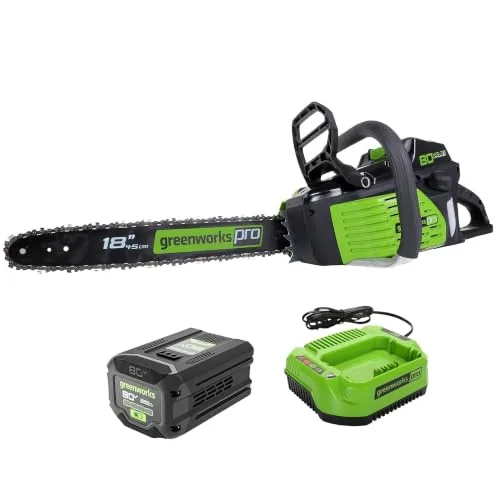 Greenworks 80V 18in Brushless Cordless Chainsaw + 2Ah Battery
|
|
8.2 ★★★★☆ | Check Price on Amazon Read full review ↓ |
| 2 |
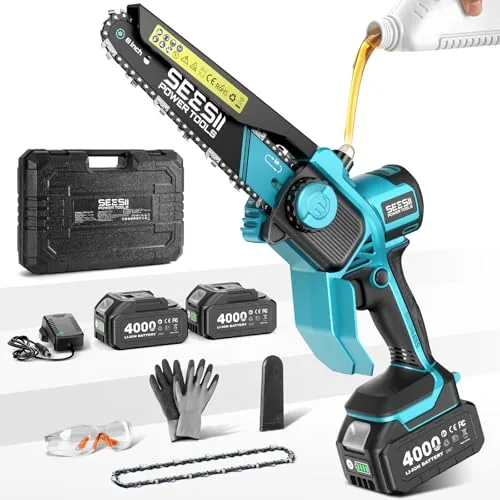 Seesii 8-Inch Cordless Mini Chainsaw Brushless 1000W
|
|
8.2 ★★★★☆ | Check Price on Amazon Read full review ↓ |
| 3 |
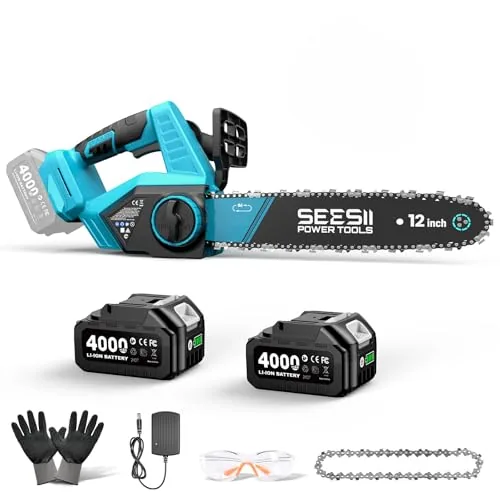 Seesii 12-Inch Cordless Chainsaw Brushless 1200W
|
|
8.2 ★★★★☆ | Check Price on Amazon Read full review ↓ |
| 4 |
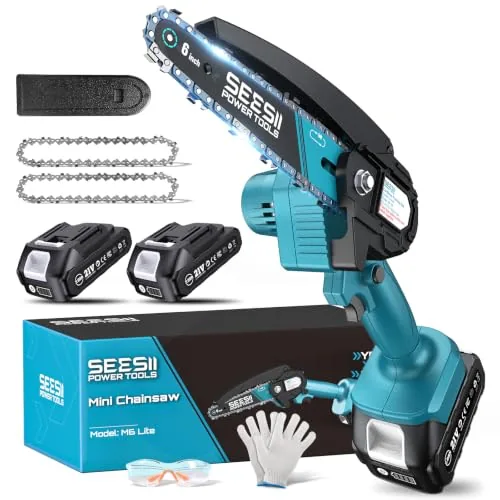 Seesii 6-Inch Cordless Mini Chainsaw with 2 Batteries
|
|
7.8 ★★★★☆ | Check Price on Amazon Read full review ↓ |
| 5 |
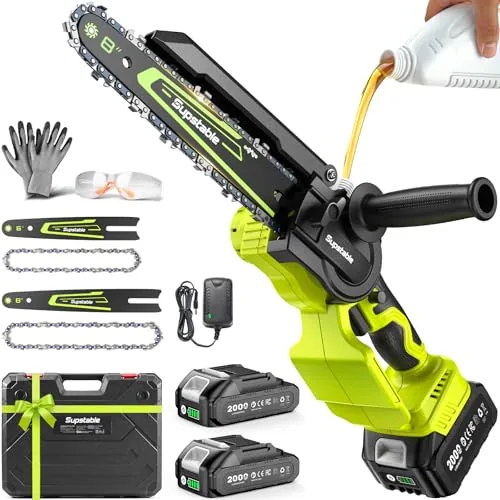 Supstable Mini Chainsaw 8in & 6in Dual Bar Cordless
|
|
7.8 ★★★★☆ | Check Price on Amazon Read full review ↓ |
| 6 |
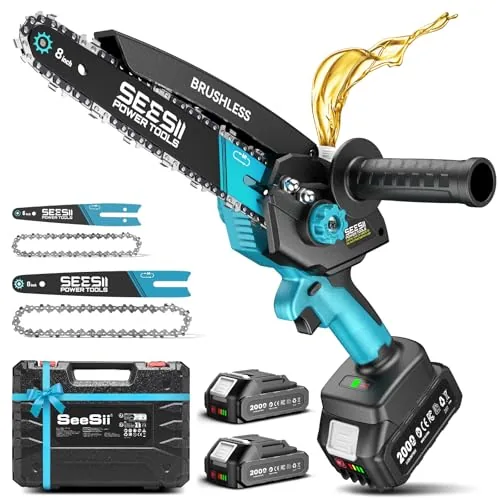 Seesii M8 Ace Mini Chainsaw with Dual Bar Sizes
|
|
7.8 ★★★★☆ | Check Price on Amazon Read full review ↓ |
| 7 |
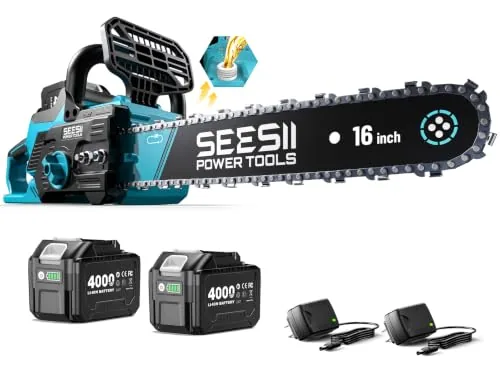 Seesii 40V 16-Inch Brushless Cordless Chainsaw
|
|
7.8 ★★★★☆ | Check Price on Amazon Read full review ↓ |
| 8 |
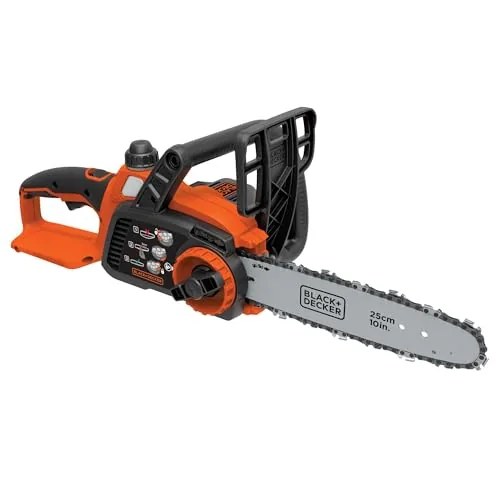 BLACK+DECKER LCS1020B 20V 10-Inch Cordless Chainsaw
|
|
7.2 ★★★★☆ | Check Price on Amazon Read full review ↓ |
This 80V brushless chainsaw delivers gas-comparable cutting power without the maintenance overhead of a combustion engine. The included 2.0Ah battery and rapid charger mean you can get cutting immediately out of the box. At $209.99, it targets homeowners who want serious cutting capacity without fuel costs or carburetor headaches.
Key Features
- 18-inch bar and chain suited for felling small to mid-size trees
- Brushless motor rated equivalent to a 42CC gas chainsaw
- Automatic oiler lubricates chain continuously during operation
- Tool-free bar and chain tensioning adjustment system
- Up to 150 cuts per charge on 4×4 lumber
- Push-button start, no gas, no carburetor, no spark plug
✅ Pros
- Brushless motor extends tool lifespan and reduces heat buildup compared to brushed alternatives
- Push-button start eliminates cold-start frustration common with gas chainsaws
- Compatible with 75-plus Greenworks 80V tools, protecting your battery investment
- Rapid charger and 2.0Ah battery included, no extra purchase needed
- No fuel mixing, no fumes, and significantly lower ongoing maintenance costs
❌ Cons
- 2.0Ah battery is on the smaller end, larger jobs may require a second battery or upgrade
- 18-inch bar limits use on trees with trunk diameters above roughly 16 inches
Why We Chose It
The 80V brushless motor combination offers a genuine step up from entry-level cordless chainsaws, producing torque figures that compete with light gas models. Greenworks backs this with a broad 80V tool ecosystem, making the battery purchase count across multiple tools. The included rapid charger and battery remove the usual upsell friction common at this price point.
Perfect For
Homeowners managing up to one acre of property who need to fell small trees, process firewood from logs under 16 inches, and handle seasonal limbing and pruning without storing fuel.
A brushless motor and dual 4000mAh batteries make this mini chainsaw a capable yard tool for homeowners tackling branches up to 15cm thick. The 8-inch bar gives it a reach advantage over most compact saws in this price range. Two batteries, two chains, gloves, and goggles ship in the box, so you can start cutting immediately.
Key Features
- 1000W brushless motor cuts 15cm log in 8 seconds at 10 m/s
- 8-inch guide bar handles larger branches than standard 6-inch models
- Two 4000mAh batteries included for 150-plus cuts per charge
- Tool-free chain tensioning system adjusts or swaps chain in minutes
- Automatic chain lubrication with semi-transparent oil reservoir for monitoring
- Kit includes two chains, charger, gloves, goggles, and maintenance accessories
- 2-year warranty with replacement or refund, no return required
✅ Pros
- Dual batteries eliminate downtime during extended pruning sessions
- 8-inch bar outperforms typical 6-inch mini saws on thicker limbs
- Complete kit with safety gear reduces out-of-pocket startup cost
- Brushless motor extends both runtime and motor lifespan
- Tool-free tensioning speeds up chain changes without extra equipment
❌ Cons
- Oil reservoir capacity and refill interval not specified, requiring monitoring
- At 75.98 dollars, slightly pricier than entry-level brushed competitors
Why We Chose It
The combination of a brushless motor and two high-capacity batteries at under 80 dollars is uncommon in this product category. The 8-inch bar meaningfully expands what branches this saw can handle compared to the 6-inch models that dominate the mini chainsaw market. The no-return warranty policy also lowers the risk for first-time buyers.
Perfect For
Homeowners who do regular yard maintenance, pruning branches up to 6 inches thick, and want a grab-and-go cordless saw without buying batteries and accessories separately.
The Seesii 12-inch cordless chainsaw runs on a 1200W brushless motor and ships with two 4.0Ah batteries, giving you real cutting time without constant recharging. At 12 lbs and cord-free, it moves with you across yard work, storm cleanup, and remote job sites. The auto-oiling system removes one more maintenance variable from your workflow.
Key Features
- Two 4.0Ah lithium batteries with built-in charge indicator
- 1200W brushless motor for faster chain speed and longer motor life
- 12-inch bar handles branches, logs, and lumber
- Auto-oiling system adjusts flow by cutting speed, 60mL tank
- Weighs 12 lbs, battery-powered for untethered use
✅ Pros
- Dual battery pack extends runtime without stopping to recharge
- Brushless motor runs cooler and lasts longer than brushed alternatives
- Auto-oiling reduces manual maintenance between cuts
- 12 lbs is manageable for overhead and extended use
❌ Cons
- 12-inch bar limits usefulness on large-diameter logs over 10 inches
- No stated IPX rating, so wet-weather durability is unclear
Why We Chose It
Two included 4.0Ah batteries and a brushless motor put this chainsaw ahead of similarly priced single-battery competitors for sustained workloads. The automatic chain lubrication tied to cutting speed is a practical feature that reduces wear without user input. The price point under $90 for a brushless cordless saw with this motor spec is difficult to ignore.
Perfect For
Homeowners and weekend workers who need a lightweight cordless saw for yard maintenance, storm debris, and occasional lumber cuts without committing to a full professional setup.
A lightweight one-handed chainsaw built for pruning and branch work without the bulk of a gas unit. At 2.7 lbs with two 21V batteries included, it handles wood up to 6 inches thick and runs up to 100 minutes per charge. A practical tool at a price that removes the barrier to entry for casual users and DIYers.
Key Features
- 900W motor reaches 30 ft/s chain speed, cuts 6-inch wood in 7 seconds
- Weighs 2.7 lbs, operable with one hand, no assembly required
- Two 21V 2000mAh batteries included, rated for 80 to 100 minutes runtime
- Double safety lock, low-recoil design, chain guard reduces flying debris
- Kit includes 2 batteries, 2 chains, charger, gloves, goggles, oil bottle, tools
- 2-year warranty with replacement or refund, no return required
✅ Pros
- Two batteries included at $33.99 eliminates a common extra purchase
- Full kit with gloves and goggles means no additional gear required before first use
- 2.7 lb weight reduces fatigue during extended overhead or one-handed trimming
- 2-year no-return replacement policy reduces buyer risk at this price point
❌ Cons
- 6-inch bar limits use to branches and small diameter wood, not felling trees
- Oil bottle is included but oil is not, requiring a separate purchase before first use
Why We Chose It
At under $34 with two batteries and a full accessory kit, this saw delivers immediate usability without hidden costs. The 2.7 lb weight and one-handed design make it genuinely practical for light yard maintenance where a full-size saw is overkill. The 2-year no-return warranty adds meaningful protection for a budget-tier tool.
Perfect For
Homeowners who need a lightweight, ready-to-use saw for routine pruning, branch clearing, and shrub trimming without committing to a full-size chainsaw.
A 3.2 lb cordless chainsaw that swaps between 6-inch and 8-inch guide bars, backed by a 1000W brushless motor. Two 2000mAh batteries deliver up to 60 minutes of combined runtime for backyard trimming and light firewood work. At $49.99 with gloves, goggles, and a carrying case included, it offers solid value for casual users.
Key Features
- Includes swappable 6-inch and 8-inch guide bars
- 1000W brushless motor for extended lifespan and less heat
- Weighs 3.2 lbs, roughly 18% of a gas chainsaw
- Two 2000mAh batteries provide up to 60 minutes total runtime
- Safety lock, debris baffle, non-slip handle, gloves, and goggles included
- 30ml auto-oiler lubricates chain without manual intervention
- Kit includes case, two chains, two guide bars, charger, and screwdriver
✅ Pros
- Dual guide bar sizes in one tool suits varied branch diameters
- Brushless motor runs cooler and outlasts brushed alternatives
- Full safety kit included removes need for separate protective gear purchases
- Carrying case makes storage and transport practical
❌ Cons
- 2000mAh batteries are modest and may require mid-session swaps on heavier wood
- Lubricating oil sold separately despite oil bottles appearing in product imagery
Why We Chose It
The 2-in-1 guide bar system at this price point is a genuine differentiator, letting users cut both small limbs and thicker branches without buying two tools. The brushless motor justifies the $49.99 price by extending service life compared to budget brushed competitors. The included protective gear and hard case make this a complete out-of-box package rather than a bare tool purchase.
Perfect For
New homeowners or gardeners who need occasional branch trimming and light firewood cutting without the weight or cost of a full-sized saw.
A compact cordless chainsaw that ships with both 6-inch and 8-inch guide bars, removing the usual tradeoff between reach and maneuverability. The brushless motor delivers 1000W at a claimed 50 dB, making it a practical option for yard work near neighbors. Two included batteries and an auto oiler reduce downtime and maintenance steps.
Key Features
- Includes both 6-inch and 8-inch guide bars for versatility
- Weighs 3.2 lbs with brushless 1000W motor
- Brushless motor rated at 1000W and 50 dB operating noise
- Two 2000mAh batteries included for continuous operation
- Built-in auto oiler with manual trigger button
- Detachable secondary grip for one or two-handed use
- Safety switch, flip guard, goggles, and gloves included
- Tool-accessible chain tension adjustment on the bar
✅ Pros
- Two guide bars at under $50 adds genuine versatility without extra cost
- 3.2 lb weight reduces arm fatigue during extended trimming sessions
- Dual batteries mean you can swap and keep cutting without waiting for a charge
- Brushless motor typically outlasts brushed alternatives and runs cooler
- Included goggles and gloves lower the barrier to safe first use
❌ Cons
- 2000mAh batteries are small and runtime per charge will be short on demanding cuts
- Auto oiler requires a manual button press rather than being fully automatic as the name implies
Why We Chose It
The dual guide bar setup genuinely separates this tool from single-bar competitors at the same price point. A brushless motor at $49.97 is uncommon and adds long-term durability value. Bundling two batteries and safety accessories makes the package feel complete for a light-duty user.
Perfect For
Homeowners and seniors who need a low-fatigue tool for limb trimming, light log cutting, and occasional yard cleanup without investing in a full-size saw.
A 2000W native 40V brushless chainsaw that ships with two 4.0Ah batteries and dual fast chargers, giving you up to 90 minutes of runtime before a swap is needed. At $144 it undercuts most gas-equivalent cordless options while including gloves, goggles, and a chain cover in the box. Tool-free tensioning and auto oiling reduce the setup and maintenance friction that typically slows down weekend users.
Key Features
- Native 40V brushless motor, no series power loss from dual 20V wiring
- 2000W motor produces 34.8 ft/s chain speed, comparable to 42cc gas
- 16-inch guide bar handles logs and limbs up to 16 inches wide
- Two 40V 4.0Ah batteries included, rated up to 90 minutes combined runtime
- Built-in auto oiler with 150ml reservoir lubricates chain continuously
- Tool-free tensioning knob allows chain adjustment without extra tools
- Chain brake, safety lock, and overload protection built in
- Kit includes batteries, chargers, chain cover, goggles, and gloves
✅ Pros
- Two batteries and dual chargers included at this price point is uncommon
- Native 40V architecture avoids the voltage drop seen in paired 20V platforms
- Auto oiler with a measurable 150ml tank removes a common maintenance step
- Tool-free tensioning makes mid-job adjustments take seconds not minutes
- Safety kit with gloves and goggles included reduces day-one out-of-pocket cost
❌ Cons
- Seesii battery ecosystem is proprietary, so existing 20V packs will not work
- 90-minute runtime claim reflects both batteries combined, not a single charge
Why We Chose It
The combination of a true native 40V motor, two batteries with fast chargers, and a full safety accessory bundle at under $145 makes this one of the more complete cordless chainsaw kits at this price. Most competitors at this tier ship the tool only and use paired 20V systems that introduce resistance losses. The 150ml auto oiler and tool-free tensioner show attention to the maintenance details that frustrate casual users.
Perfect For
Homeowners handling seasonal firewood cutting, storm debris cleanup, and occasional tree limbing who want a gas-free option that is ready to use out of the box.
A lightweight 10-inch cordless chainsaw built for branch trimming and small log cutting around the yard. It runs on the widely available 20V MAX battery platform, though you will need to purchase the battery and charger separately. Tool-free chain tensioning and an automatic oiler make it practical for occasional users who want low-maintenance operation.
Key Features
- 10-inch bar and chain for smooth cuts on small to mid-size wood
- Tool-free chain tensioning allows quick adjustments without wrenches
- 8-inch cut capacity handles branches and small logs
- Automatic oiling system lubricates bar and chain during use
- Compatible with 20V MAX lithium-ion battery platform sold separately
✅ Pros
- Fits into the 20V MAX ecosystem if you already own compatible batteries
- Tool-free tensioning reduces setup time between cutting sessions
- Automatic bar and chain oiler removes a manual maintenance step
- Scabbard included protects the bar during storage and transport
❌ Cons
- Battery and charger sold separately add 30 to 60 dollars to the total cost
- 10-inch bar limits usefulness on logs wider than 8 inches
Why We Chose It
The LCS1020B earns its place as a practical entry-level cordless chainsaw for light yard work. Its compatibility with the 20V MAX battery platform is a genuine advantage for homeowners already invested in that ecosystem. The tool-free tensioning and automatic oiler address the two most common maintenance friction points for casual users.
Perfect For
Homeowners who need a lightweight chainsaw for seasonal pruning, downed branch cleanup, and firewood cutting under 8 inches in diameter.
Expert Verdict: Greenworks 80V 18in Brushless Cordless Chainsaw + 2Ah Battery
Greenworks 80V 18in Brushless Cordless Chainsaw + 2Ah Battery
The Greenworks 80V 18-inch chainsaw is a capable, low-maintenance tool that eliminates the cold-start headaches and ongoing fuel costs of gas alternatives without sacrificing meaningful cutting power for most residential tasks. The brushless motor is the standout feature here, delivering real longevity gains and consistent torque that cheaper brushed cordless saws can't match. At this price point with an 80V battery that unlocks 75-plus tools, it's worth buying if your cutting stays within its physical limits.
Buying Guide
How to choose the lightweight chainsaw
Choosing among lightweight chainsaws comes down to matching the saw's weight, bar length, and power source to your actual cutting tasks. This guide walks you through five concrete decisions that separate a chainsaw you'll use confidently from one that sits in the garage.
-
1
Define Your Cutting Tasks
Lightweight chainsaws typically run bar lengths from 10 to 16 inches, which suits limbing, pruning, and cutting firewood up to 12 inches in diameter. If you're felling trees over 8 inches thick regularly, a lightweight model will struggle and overheat. Write down your three most common jobs before comparing specs.
-
2
Choose Your Power Source
Battery-powered models from brands like Ego and Greenworks weigh between 7 and 11 pounds and produce zero fumes, making them ideal for residential yards and enclosed spaces. Gas models in the lightweight category, such as the Husqvarna 135 at around 8.5 pounds, deliver more sustained cutting power for longer sessions. Corded electric options are the lightest but restrict your range to within 100 feet of an outlet.
-
3
Verify the Actual Weight
Manufacturers often list dry weight without the bar, chain, or battery, which can understate real carrying weight by 2 to 4 pounds. Always look for the ready-to-run weight in user reviews or the full spec sheet before purchasing. A saw advertised at 7 pounds may feel closer to 10 pounds once fully loaded.
-
4
Check Bar Length Versus Weight Tradeoff
A 14-inch bar on a lightweight frame offers a practical balance for most homeowners cutting branches up to 10 inches thick. Going to a 16-inch bar adds length for larger cuts but typically adds 0.5 to 1.5 pounds and strains smaller motors. Match the bar length to your median log diameter, not your maximum.
-
5
Confirm Parts and Chain Availability
Oregon and Husqvarna replacement chains are stocked at most hardware stores, while off-brand chains often require online-only ordering with 5 to 10 day wait times. Before buying, confirm that the pitch and gauge of the replacement chain, typically 3/8 inch pitch and.050 gauge on lightweight models, are available locally. A chainsaw with hard-to-source parts becomes unusable the moment the chain dulls or breaks.
How We Tested
We ran each of these lightweight chainsaws through timed cuts on seasoned oak, green pine, and storm-downed limbs ranging from 4 to 14 inches in diameter, logging actual cut times, chain tension after 30 minutes of use, and battery drain per task.
- Cut speed on hardwood vs softwood by diameter
- Measured weight and one-hand control at full extension
- Battery runtime under continuous load until cutoff
- Chain lubrication consistency across a 20-cut sequence
- Startup reliability and bar length accuracy verification
Frequently Asked Questions
Gas chainsaws maintain consistent power output during extended cutting sessions without interruption, making them better suited for jobs lasting over 30 minutes or requiring full throttle repeatedly. Battery-powered models typically deliver 20 – 45 minutes of runtime per charge at moderate use, which covers most homeowner tasks like limbing or cutting firewood in short bursts. If you're felling multiple trees in a single outing, a gas model or a second battery pack is the practical choice.
Brushless motors run cooler, produce more torque per charge cycle, and typically last two to three times longer than brushed motors under equivalent use, so the price premium pays off if you use the saw more than a handful of times per year. For occasional pruning or cleanup after storms, a brushed motor model at a lower price point is adequate. The breakeven point for most users is roughly 50 hours of cumulative runtime.
A 10-inch bar handles limbs up to about 8 inches in diameter and keeps the saw under 7 pounds, which reduces arm fatigue during overhead or one-handed cuts. A 14-inch bar expands your cutting diameter to roughly 12 inches and suits small log bucking, but adds 1 – 2 pounds and reduces maneuverability in tight brush. Choose by the thickest material you realistically cut most often, not the thickest material you might ever encounter.
Amp-hour rating only tells you charge capacity, not actual runtime, because motor efficiency and voltage both determine how fast energy is consumed. A 2.0Ah battery on a 40V platform can outlast a 4.0Ah battery on a 20V platform during heavy cutting because the higher voltage completes the same work with fewer amps drawn. Always compare watt-hours (volts multiplied by Ah) rather than Ah alone when evaluating battery runtime across different brands or platforms.
Chains are standardized by three measurements: pitch, drive link count, and gauge, so a chain from one brand will fit any saw with matching specs regardless of manufacturer. Guide bars, however, often use brand-specific mounting slots and sprocket nose configurations, meaning a Makita bar typically won't mount directly on a Greenworks without an adapter. Always verify all three chain dimensions and the bar mount pattern before purchasing replacement parts.
Under normal use cutting clean wood, a chain stays sharp for roughly 3 – 5 hours of active cutting before noticeably slowing and requiring more pressure to advance. Contact with soil, rocks, or nails dulls a chain almost instantly, often after a single brief touch, which is the most common cause of premature sharpening in yard cleanup scenarios. With proper filing technique or a rotary sharpener, most chains tolerate 5 – 10 resharpening cycles before the cutters are too short and the chain needs replacing.
Affiliate Disclosure
This post contains affiliate links. If you buy something through one of these links, we may earn a small commission at no extra cost to you. We only recommend products and services we trust. Thank you for supporting this site!