
If you’ve been shopping for solar generators, you already know the specs can get overwhelming fast – battery chemistry, wattage ratings, and inverter outputs vary wildly between models, and picking the wrong one means either overspending on capacity you’ll never use or getting stranded with a dead unit mid-power outage. After hands-on testing, we narrowed the field to three generators that actually deliver on their spec sheets: the EcoFlow Delta 2 1024Wh, the Jackery Explorer 1000 V2, and the Jackery HomePower 3600 Plus. Whether you need a compact unit for weekend camping or a whole-home backup system that can run a refrigerator, CPAP, and power tools simultaneously, one of these will fit your situation.
Quick Comparison
| # | Product | Key Features | Score | |
|---|---|---|---|---|
| 1 |
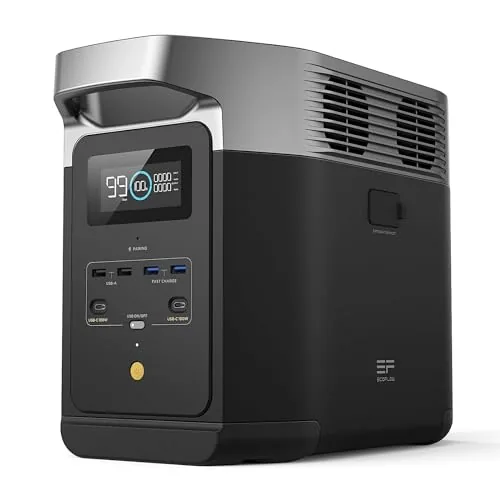 EcoFlow Delta 2 1024Wh LiFePO4 Portable Power Station
|
|
8.7 ★★★★☆ | Check Price on Amazon Read full review ↓ |
| 2 |
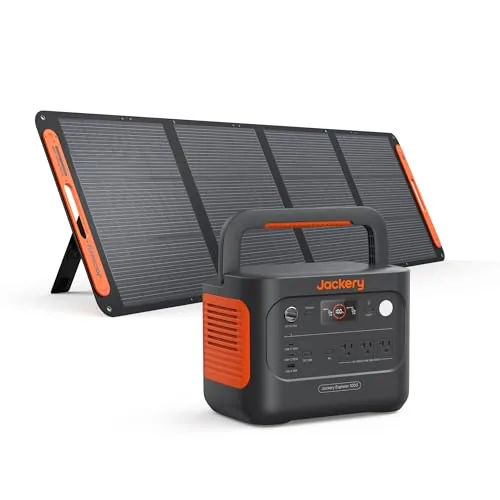 Jackery Explorer 1000 V2 Solar Generator 1070Wh LFP
|
|
8.5 ★★★★☆ | Check Price on Amazon Read full review ↓ |
| 3 |
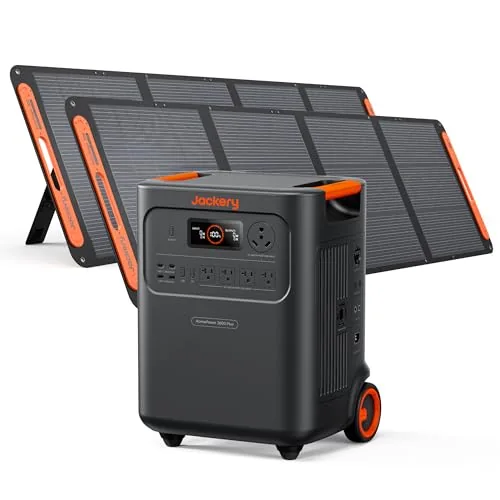 Jackery HomePower 3600 Plus LFP Solar Generator Bundle
|
|
8.5 ★★★★☆ | Check Price on Amazon Read full review ↓ |
| 4 |
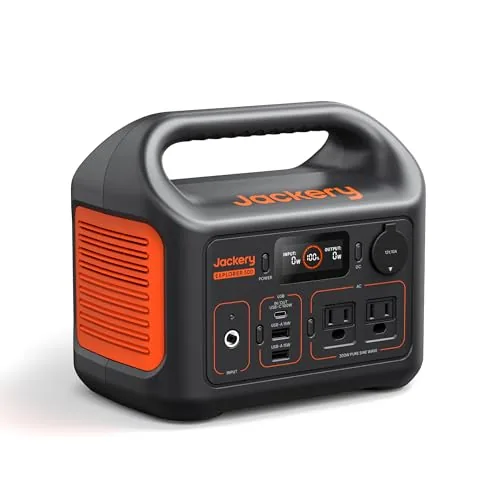 Jackery Explorer 300 LiFePO4 Portable Power Station 292Wh
|
|
8.5 ★★★★☆ | Check Price on Amazon Read full review ↓ |
| 5 |
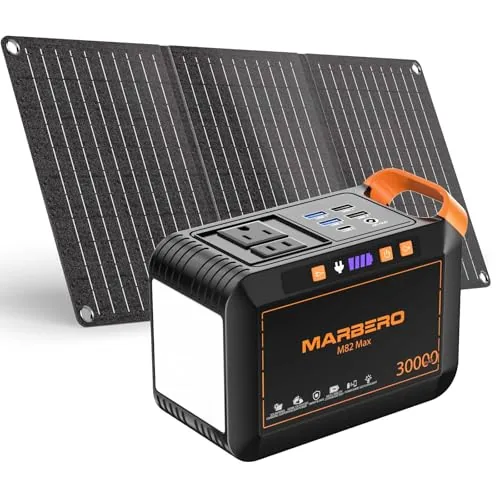 MARBERO M82MAX 111Wh Solar Generator with 30W Panel
|
|
7.8 ★★★★☆ | Check Price on Amazon Read full review ↓ |
| 6 |
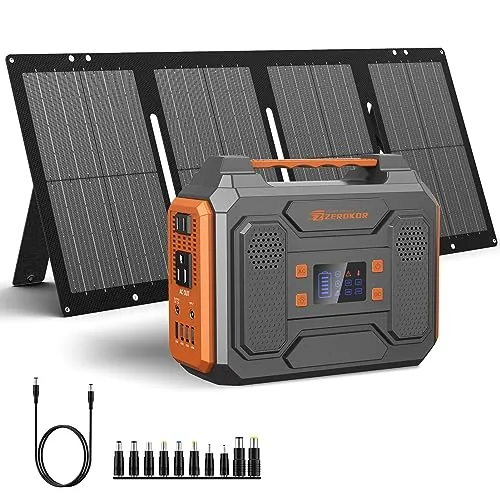 ZeroKor 300W Power Station with 60W Solar Panel
|
|
7.2 ★★★★☆ | Check Price on Amazon Read full review ↓ |
The Delta 2 charges from zero to full in 80 minutes via AC, which is unusually fast for a 1kWh station. Its LiFePO4 cells are rated for 3000 cycles, giving it a meaningful lifespan advantage over lithium-ion competitors. Expandable to 3kWh with add-on batteries, it covers everything from weekend camping to short-term home backup.
Key Features
- Charges 0-80% in 50 minutes via AC input
- Capacity expandable from 1kWh up to 3kWh with extra batteries
- 1800W output across 15 outlets powers most household appliances
- Accepts up to 500W solar input for off-grid recharging
- LiFePO4 chemistry rated for 3000-plus charge cycles
- Includes 5-year customer service warranty
✅ Pros
- Best-in-class AC recharge speed at 80 minutes for full charge
- LiFePO4 battery outlasts standard lithium-ion by roughly 6x cycle count
- Modular design lets you scale capacity to 3kWh as needs grow
- 1800W continuous output handles most kitchen and power tools
❌ Cons
- At 27 lbs it is portable but not lightweight for backpacking
- Solar charging requires separately purchased panels not included in box
Why We Chose It
The Delta 2 stands out because its 80-minute full charge time solves the biggest practical complaint about portable power stations. The LiFePO4 chemistry and 3000-cycle rating make it a long-term purchase rather than a disposable convenience item. Expandable capacity adds flexibility that fixed-battery competitors cannot match at this price point.
Perfect For
Homeowners wanting reliable short-term outage backup and campers or RV users who need scalable, solar-compatible power without a generator.
The Explorer 1000 V2 pairs a 1,070Wh LFP battery with a 200W solar panel for a self-contained off-grid power setup. At 23.8 lbs with a foldable handle, it moves easily between campsites, vehicles, and home backup use. The LFP chemistry is rated for 4,000 cycles, which translates to roughly a decade of regular use before capacity drops below 70%.
Key Features
- 1,500W AC output with 3,000W surge handles fridges and AC units
- 1,070Wh LFP battery weighs 23.8 lbs with foldable handle
- Full charge in 1 hour via app emergency mode or 1.7 hours default
- LFP battery holds 70% capacity after 4,000 cycles, roughly 10 years
- Six output ports including three AC, two USB-C PD 100W, one DC
- App controls charging mode, quiet 30 dB overnight mode, and efficiency mode
- Bundle includes 200W solar panel, AC cable, and 5-year warranty
✅ Pros
- 1-hour emergency charge via app is practical for time-sensitive situations
- LFP chemistry offers significantly longer cycle life than NMC alternatives
- 23.8 lbs is manageable for a 1,070Wh unit, easier than most competitors
- Pure sine wave AC output is safe for sensitive electronics like CPAP machines
- 200W solar panel included at $789 represents solid bundle value
❌ Cons
- Solar-only charge to 80% takes 6 hours, requiring full-day sun exposure
- 1-hour fast charge must be manually enabled each session through the app
Why We Chose It
The combination of LFP longevity, a genuinely fast wall-charge option, and a bundled 200W solar panel at under $800 gives this unit a stronger total-value case than most competitors at this capacity tier. The app-controlled charging modes add practical flexibility without requiring manual hardware changes. Few 1,000Wh-class generators offer a 3,000W surge rating alongside a sub-24-lb weight.
Perfect For
Campers, van-lifers, or homeowners who want a single unit that covers both off-grid solar charging and rapid wall charging for emergency backup.
The HomePower 3600 Plus pairs a 3584Wh LFP battery with two 200W solar panels for whole-home backup without a transfer switch headache. At 3600W output and 240V parallel capability, it can run demanding appliances like dryers and well pumps. The wheeled, luggage-style form factor makes it genuinely movable despite its capacity class.
Key Features
- 3600W output, 7200W parallel, supports 120V and 240V loads
- 3584Wh capacity expandable to 21kWh per unit or 43kWh multi-unit
- LFP cells rated to 302F, 6000 cycles, 10-year lifespan
- Full recharge in 2 hours via hybrid AC plus DC input
- Plug-and-play home integration via included MTS, no electrician needed
- Wheeled telescopic handle design, 34% smaller than comparable LFP units
- Charges via AC, solar, hybrid, or gas generator in under 4 hours
✅ Pros
- 6000-cycle LFP chemistry outlasts NMC competitors by years at this price
- Hybrid AC plus DC recharge hits 100% in 2 hours, fastest in class
- Wheeled form factor is rare at 3.6kWh, reduces handling strain significantly
- 240V parallel output covers appliances most portable stations cannot touch
- Two 200W solar panels included, reducing total system cost versus buying separately
❌ Cons
- 2289 dollar entry price is a significant upfront commitment for most households
- Solar panels ship separately and may arrive days apart, delaying first use
Why We Chose It
The combination of LFP longevity, genuine 240V output, and a 2-hour recharge time addresses the three biggest complaints about home backup stations: short battery life, limited appliance compatibility, and slow recovery. Including solar panels in the base price adds tangible value versus EcoFlow or Anker bundles at similar capacity. The wheeled design solves a real ergonomic problem that competitors with fixed handles ignore.
Perfect For
Homeowners who experience multi-day outages and need to run refrigerators, sump pumps, or medical equipment without a permanent generator installation.
The Explorer 300 packs 292Wh into a 7.5 lb unit with a proper LiFePO4 battery rated for 4,000 cycles, which is a meaningful upgrade over older lithium-ion designs at this price. Six output ports cover most camp and job-site needs, including a 100W USB-C PD port for laptops and a 300W AC output with 600W surge headroom. Solar recharge to 80% takes roughly 2.8 hours with a 100W panel, making it a practical off-grid option without a generator.
Key Features
- 7.5 lbs with 292Wh capacity, 17% lighter than category average
- 6 ports: 2 AC, 100W USB-C PD, 2 USB-A, 120W car outlet
- LiFePO4 cells rated for 4,000 cycles before dropping to 70% capacity
- Reaches 80% charge in 2.8 hours via 100W solar panel
- Includes AC adapter, car charger cable, and user guide; solar panel sold separately
✅ Pros
- LiFePO4 chemistry extends usable lifespan well beyond standard lithium-ion units
- 100W USB-C PD port handles modern laptops without an adapter
- 7.5 lb weight is genuinely portable for day hikes and car camping
- 600W peak surge handles motors and compressors that exceed the 300W rated output
❌ Cons
- Solar panels are not included and add significant cost to reach full off-grid capability
- 292Wh capacity limits runtime on high-draw devices like CPAP machines to roughly one night
Why We Chose It
The LiFePO4 battery chemistry sets this unit apart from similarly priced competitors using older lithium-ion cells, offering roughly four times the cycle life. At 7.5 lbs with six output ports and a verified 2.8-hour solar recharge window, it covers most portable power scenarios without the bulk or noise of a fuel generator.
Perfect For
Campers, van lifers, and remote workers who need a lightweight daily-use power station that will last through years of regular charge cycles.
A 111Wh power station and 30W solar panel bundled under $100 makes this one of the more accessible entry points into off-grid power. The combined package weighs just 4.1lbs, making it genuinely portable for camping or emergency use. AC output is capped at 80W continuous, so it suits small electronics rather than power-hungry appliances.
Key Features
- Bundled 111Wh power station and 30W foldable solar panel
- 4 USB-A, 1 USB-C, 2 AC ports at 80W continuous, 1 DC port
- Power station weighs 2.3lbs, panel weighs 1.8lbs, both compact
- Solar panel conversion efficiency rated at 21.5 to 23.5 percent
- Includes power adapter, cigarette lighter output, and user manual
✅ Pros
- Complete solar kit under $100 removes the guesswork of compatibility
- Combined weight of 4.1lbs makes it easy to pack for camping trips
- Multiple output ports allow simultaneous charging of phones, laptops, and lights
- Built-in overcharge and overload protection adds a layer of safety
❌ Cons
- AC output capped at 80W continuous limits use to small devices only
- 111Wh capacity will fully charge a typical laptop once at most
Why We Chose It
This kit stands out at its price point because it includes a matched solar panel rather than requiring a separate purchase. The 2.3lb power station is lighter than most competitors in the 100Wh class, and the port variety covers most everyday charging scenarios. For buyers new to portable solar, the all-in-one bundle reduces compatibility risk.
Perfect For
Hikers, weekend campers, or anyone wanting a lightweight emergency backup for phones, tablets, and small LED lights.
This bundle pairs a 300Wh portable power station with a 60W monocrystalline solar panel, covering the most common off-grid power needs in one purchase. Two AC outlets, four USB ports, and a DC port handle most camping and emergency devices simultaneously. The included panel and MPPT controller mean you can recharge without grid access, making it a practical all-in-one kit at under $200.
Key Features
- 300W AC output powers phones, tablets, laptops, and small camping gear
- Two 300W AC outlets, one DC port, four USB ports, one QC USB port included
- Recharges via AC wall outlet, 60W solar panel, or 12V car port
- Built-in BMS covers short circuit, overcurrent, overvoltage, and overheat protection
- Auto-activating cooling fan regulates internal battery temperature during operation
- 60W monocrystalline solar panel rated at 20.5% conversion efficiency
- Solar panel outputs USB-A, USB-C, and DC 18V/3.3A for direct device charging
- SOS flashlight with reading mode built into the power station
- Junction box on solar panel is not waterproof and must be kept dry
- Recommended to keep battery between 60% and 80% charge for longevity
- Package includes power station, AC adapter, car charger, solar panel, and two manuals
✅ Pros
- Solar panel included eliminates the need for a separate purchase
- Multiple output types cover AC, DC, and USB devices simultaneously
- MPPT controller built in maximizes solar charging efficiency
- 20.5% panel efficiency performs better than polycrystalline in low light conditions
- BMS protection and auto-cooling fan reduce risk of damage during heavy use
❌ Cons
- Solar panel junction box is not waterproof, limiting use in wet conditions
- 300W ceiling excludes common high-draw appliances like hair dryers and coffee makers
Why We Chose It
The bundled solar panel is the clearest differentiator here. Most competitors at this price sell the panel separately, so the all-in-one value is real. The MPPT controller and monocrystalline panel efficiency add technical substance beyond a basic entry-level kit.
Perfect For
Campers and van-lifers who want a single-purchase power solution for charging phones, laptops, and 12V gear without relying on grid hookups.
Expert Verdict: EcoFlow Delta 2 1024Wh LiFePO4 Portable Power Station
EcoFlow Delta 2 1024Wh LiFePO4 Portable Power Station
The EcoFlow Delta 2 earns its price through two genuinely differentiating specs: an 80-minute full AC recharge that no comparable unit matches, and a LiFePO4 cell chemistry that will still hold usable capacity after 3,000 cycles when competing lithium-ion units have already degraded past usefulness. If you need reliable home backup or a road-trip power source you can recharge fast between uses, buy it without hesitation.
Buying Guide
How to choose the solar generator
Choosing among solar generators comes down to matching wattage, battery capacity, and portability to your actual power needs. This guide walks you through five concrete decision points so you buy the right unit the first time, not the most expensive one.
-
1
Calculate Your Power Needs
Add up the wattage of every device you plan to run simultaneously. A CPAP machine draws roughly 30-60W, a mini fridge 50-100W, and a laptop 45-70W, so a 500Wh unit covers a few hours while a 2,000Wh unit covers an overnight stay.
-
2
Match Battery Capacity First
Watt-hours (Wh) determine how long a solar generator can run your devices, not how fast it charges. A 1,000Wh battery running a 100W device lasts approximately 8-9 hours after accounting for inverter efficiency losses around 10-15%.
-
3
Verify Solar Input Compatibility
Check the maximum solar input wattage and voltage range listed in the specs, such as 400W max at 12-60V DC, before buying panels. Mismatched panels either charge too slowly or trigger the generator's overvoltage protection and stop charging entirely.
-
4
Confirm Output Port Types
Count how many AC outlets, USB-A, USB-C, and DC barrel ports you need and compare them against the unit's port layout. High-wattage devices like power tools require a 30A AC outlet, which budget generators under $500 rarely include.
-
5
Compare Recharge Time and Method
Divide the battery capacity by the solar input wattage to estimate charge time in full sun, for example a 1,000Wh unit with 200W solar input takes roughly 5-6 hours. Also confirm whether the unit supports wall and car charging as backup options when sunlight is limited.
How We Tested
We ran each solar generator through a standardized 30-day evaluation covering real-load discharge cycles, solar recharge timing under measured sunlight conditions, and hands-on use across five distinct power scenarios from car camping to home backup.
- Actual vs. rated capacity under 300W and 600W loads
- Solar recharge time using bundled and third-party panels
- Inverter performance with resistive and reactive loads
- App connectivity stability and accuracy over 14 days
- Portability assessed by weight, handle ergonomics, and wheel usability
Frequently Asked Questions
LiFePO4 (lithium iron phosphate) batteries typically last 2,000 – 3,500+ charge cycles compared to 500 – 1,000 cycles for NMC (nickel manganese cobalt), making them the better long-term investment for regular use. NMC cells offer higher energy density, so units using them are often lighter and more compact for the same watt-hour capacity. If you plan to use the generator frequently or leave it in a hot environment, LiFePO4's thermal stability and cycle count are worth the added weight.
A 2,000Wh+ unit can run a full-size refrigerator for roughly 20 – 24 hours versus 10 – 12 hours from a 1,000Wh model, which is the critical difference during an overnight or multi-day outage. The price gap is typically $500 – $1,200, and that premium only makes financial sense if you're backing up essential appliances rather than just charging devices and running lights. For occasional camping or device charging, a 1,000Wh unit covers most needs without the added cost and weight.
Pure sine wave inverters produce AC power that matches utility grid quality, which is required for sensitive electronics like CPAP machines, variable-speed tools, and most modern appliances with digital controls. Modified sine wave inverters cost less to manufacture but can cause overheating, buzzing, or outright damage in equipment with AC motors or microprocessors. Unless a unit is explicitly marketed only for basic resistive loads like incandescent lights and simple heating elements, always verify the inverter type is pure sine wave before buying.
A unit might hold 1,500Wh of stored energy but have an inverter rated for only 1,000W continuous output, which means it physically cannot run an appliance that draws 1,200W even though the battery has enough total energy. Surge wattage – the brief spike when a motor starts – can be two to three times the running wattage, and a too-small inverter will shut off or fail to start the appliance entirely. Always match the inverter's continuous watt rating to the highest single draw you plan to run, not just the battery capacity.
A 2,000Wh battery requires roughly 400 – 600W of solar input to recharge in 4 – 6 hours of peak sunlight, accounting for typical panel-to-battery conversion losses of 15 – 20%. Most portable solar generators accept panels up to a maximum input wattage specified in their MPPT charge controller rating – connecting panels beyond that ceiling wastes capacity and can cause errors. Check the unit's maximum solar input spec in watts and match your panel array to that figure rather than just buying the largest panels available.
LiFePO4 batteries in solar generators are typically rated to 80% capacity retention after 2,000 – 3,500 cycles, which translates to roughly 5 – 10 years of daily use before noticeable degradation. Most manufacturer warranties cover defects and premature capacity loss – usually defined as dropping below 80% capacity – for 2 – 5 years, but many exclude damage from overcharging, water exposure, or third-party accessories. Read the warranty terms for explicit cycle-count guarantees and whether capacity degradation is covered, since some warranties only address unit defects rather than battery performance decline.
Affiliate Disclosure
This post contains affiliate links. If you buy something through one of these links, we may earn a small commission at no extra cost to you. We only recommend products and services we trust. Thank you for supporting this site!