
A slow leak under the sink or a washing machine hose that lets go at 2 a.m. can cause thousands of dollars in water damage before you even know something is wrong – which is exactly why flood and leak sensors with automatic shutoff have become one of the smarter home protection investments you can make. Unlike basic moisture alarms that just beep, the best systems on this list physically close your water supply the moment a leak is detected, cutting off the problem at the source. We tested and compared three leading options – the YoLink X3 Water Leak Detection & Auto Shut-Off Kit, the FloodStop 3/4″ 90-Degree Washing Machine Leak Detector Kit, and the HydroCheck WaterWatcher USA-Made Leak Detector with Auto Shutoff – to help you find the right fit for your home, budget, and plumbing setup.
Quick Comparison
| # | Product | Key Features | Score | |
|---|---|---|---|---|
| 1 |
 YoLink X3 Water Leak Detection & Auto Shut-Off Kit
|
|
8.5 ★★★★☆ | Check Price on Amazon Read full review ↓ |
| 2 |
 FloodStop 3/4" 90-Degree Washing Machine Leak Detector Kit
|
|
8.2 ★★★★☆ | Check Price on Amazon Read full review ↓ |
| 3 |
 HydroCheck WaterWatcher USA-Made Leak Detector with Auto Shutoff
|
|
8.2 ★★★★☆ | Check Price on Amazon Read full review ↓ |
| 4 |
 FloodStop 3/4" Straight Washing Machine Leak Detector Kit
|
|
8.2 ★★★★☆ | Check Price on Amazon Read full review ↓ |
| 5 |
 E-SDS Auto Water Leak Detector with Shutoff Valve
|
|
7.8 ★★★★☆ | Check Price on Amazon Read full review ↓ |
| 6 |
 YoLink EVO Auto Water Leak Detection & Shut-Off Kit
|
|
7.8 ★★★★☆ | Check Price on Amazon Read full review ↓ |
| 7 |
 E-SDS Water Leak Detector with Auto Shutoff Valve
|
|
7.8 ★★★★☆ | Check Price on Amazon Read full review ↓ |
| 8 |
 BINGOX Water Leak Detector with Auto Shut-Off Valve
|
|
7.8 ★★★★☆ | Check Price on Amazon Read full review ↓ |
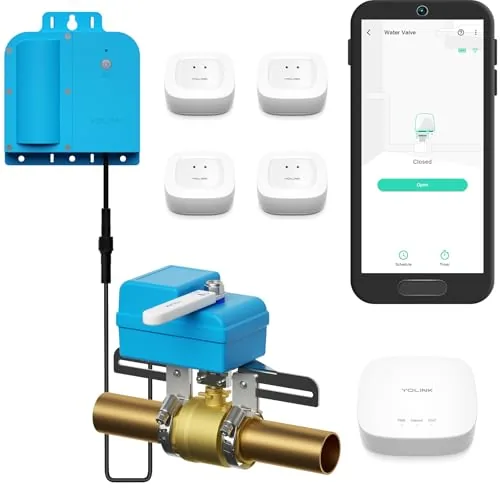
A complete four-sensor leak detection system that automatically closes your water valve when a leak is detected, even without WiFi or power. Built on LoRa radio technology, it reaches up to a quarter mile and supports over 300 devices on a single hub. At $329.99, it covers the hardware most homeowners need to protect against burst pipes and appliance failures.
Key Features
- Kit includes 4 leak sensors, valve controller, operator, and hub
- Operates without WiFi or internet via device-to-device pairing
- Hub supports 300+ devices and up to quarter-mile range via LoRa
- Compatible with Alexa and Google Assistant for voice control
- Scalable from single-family homes to multi-unit buildings
- Install away from flooding, condensation, and extreme temperatures
✅ Pros
- Continues functioning during power outages and internet loss
- LoRa radio gives far greater range than standard WiFi or Z-Wave sensors
- Single hub can scale to 300+ devices across multiple smart home categories
- Alexa and Google integration allows voice control and cross-platform routines
❌ Cons
- At $329.99 upfront cost is high compared to basic leak alarm alternatives
- Requires a compatible ball valve and proper installation conditions to perform reliably
Why We Chose It
The offline device-to-device pairing is the most practical feature here, meaning a router outage or power cut does not disable your flood protection. The LoRa radio range eliminates the dead-zone problems common with WiFi-based sensors in basements or garages. It also serves as a hub foundation for a broader smart home build rather than a single-purpose gadget.
Perfect For
Homeowners who want automatic water shutoff with redundancy against internet and power failures, especially in larger properties or homes with known plumbing risk points.
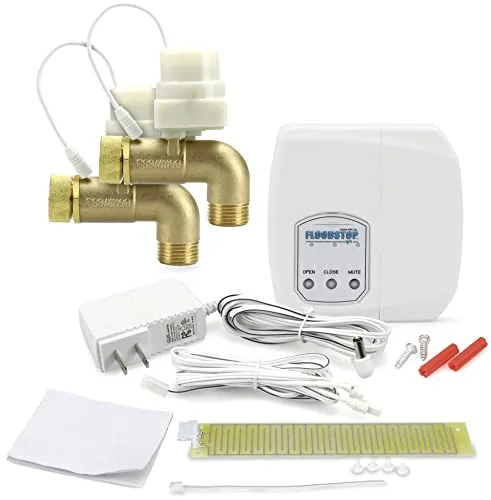
The FloodStop kit automatically shuts off water the moment a leak is detected, protecting floors and walls without cutting flow to the rest of the house. Solid brass ball valves rated to 140 PSI handle both residential and commercial water pressure with room to spare. Installation takes roughly 15 minutes, making this a practical upgrade for any laundry room with standard 3/4-inch hose connections.
Key Features
- Audible and visual alarms with 15-minute installation
- Automatic shut-off isolates washer without affecting other fixtures
- Full-port solid brass ball valves rated to 140 PSI
- Lead-free certified under AB1953 and NSF 61 standards
- Complies with IPC, IRC, UPC, and Canadian NPC plumbing codes
✅ Pros
- Shuts off only the washer supply, leaving the rest of the home unaffected
- 140 PSI-rated brass valves built for long-term reliability
- Meets major US and Canadian plumbing codes, useful for permitted work
- 15-minute install suits homeowners without plumbing experience
❌ Cons
- At $286.72, the price is steep compared to basic flood sensors without auto shut-off
- 90-degree fitting configuration may not suit all washer hookup layouts
Why We Chose It
The combination of automatic shut-off, code compliance across four plumbing bodies, and lead-free brass construction sets this apart from simple sensor-only devices. It addresses the actual damage event by stopping water flow, not just alerting you after the fact.
Perfect For
Homeowners or landlords who want hands-free leak protection for washing machines in finished spaces where water damage would be costly.
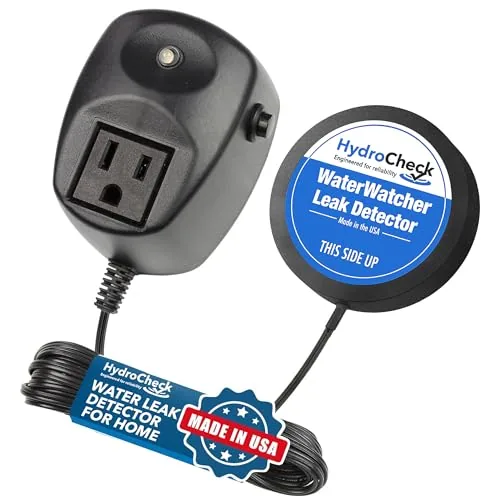
The WaterWatcher detects standing water and immediately cuts power to the connected appliance, stopping leaks before they become floods. It requires a manual reset before the appliance can run again, which forces you to physically confirm the issue is resolved. At $99.99, it targets homeowners who want active protection rather than just an alert sound.
Key Features
- Detects water and automatically shuts off connected appliance
- Improved sensor catches small water traces, suitable for dehumidifiers
- Manual reset required before appliance restarts after water detected
- Compatible with dehumidifiers, washing machines, aquariums, and well pumps
- Five-year warranty with direct customer support included
✅ Pros
- Cuts appliance power on detection rather than just sounding an alert
- Manual reset prevents appliance from restarting until you physically intervene
- Broad appliance compatibility covers most common household leak sources
- Five-year warranty is well above the category standard
- Made in the USA with stated pure water detection capability
❌ Cons
- At $99.99 it costs significantly more than basic water alarms that only alert
- Manual reset is a safety feature but may frustrate users with frequent false triggers
Why We Chose It
Most water sensors only sound an alarm and leave the appliance running, but the WaterWatcher actually cuts power at the outlet, which is a meaningful functional difference for high-risk appliances like dehumidifiers or washing machines. The manual reset requirement adds a deliberate checkpoint that prevents resumption of a problem before it is fixed. The five-year warranty signals genuine confidence in build quality for a USA-made product.
Perfect For
Homeowners who run dehumidifiers or washing machines in basements and want automatic shutoff rather than just an audible warning.
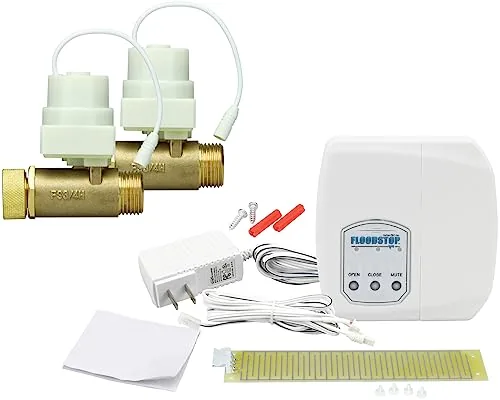
The FloodStop kit combines a water sensor with an automatic brass ball valve shutoff, cutting supply to your washing machine the moment a leak is detected while keeping the rest of your plumbing running. Installation takes roughly 15 minutes using standard connections, and the unit requires no ongoing maintenance. At $286.72 it is a serious investment, but it targets a real risk since washing machine failures are a leading cause of residential water damage.
Key Features
- Sensor triggers audible and visual alarms, installs in about 15 minutes
- Automatic shutoff isolates washing machine only, other fixtures stay operational
- Heavy-duty full-port solid brass ball valve rated to 140 PSI
- Lead-free certified to AB1953 and NSF 61 standards
- Listed under IPC, IRC, UPC, and Canadian NPC plumbing codes
✅ Pros
- Shuts off only the washing machine supply, no whole-home water interruption
- Full-port brass valve handles 140 PSI, suitable for residential and commercial pressure
- Meets NSF 61 and AB1953 lead-free standards plus major North American plumbing codes
- No scheduled maintenance required after installation
❌ Cons
- $286.72 price point is high compared to basic sensor-only leak alarms
- Kit covers one appliance connection only, multi-machine setups need additional units
Why We Chose It
The solid brass full-port valve and compliance with NSF 61, AB1953, and multiple plumbing codes set this apart from cheaper plastic-valve alternatives. Isolating only the washing machine supply rather than cutting whole-house water is a practical design choice that avoids disrupting the rest of the household. Those certifications also matter for insurance claims and permit inspections.
Perfect For
Homeowners or property managers who want a certified, install-and-forget automatic shutoff specifically for washing machines in finished laundry spaces where water damage would be costly.
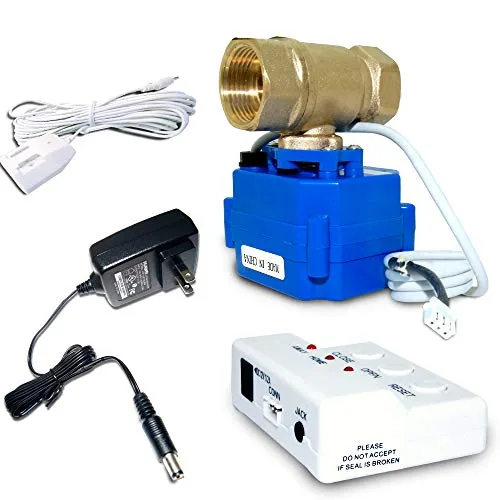
This unit combines a motorized brass ball valve with a remote flood sensor, shutting off your water supply within 2 seconds of detecting moisture. At $109.99 it covers both detection and automatic shutoff in one package, which most standalone sensors skip entirely. Battery backup keeps it functional during power outages, a practical edge over AC-only competitors.
Key Features
- Motorized 3/4 NPT brass ball valve shuts off water within 2 seconds
- Fits standard 3/4 inch plumbing, suitable for water heaters and laundry lines
- 120dB audible alarm and flashing LED activate immediately on leak detection
- Remote water sensor with 19.68 ft cable detects floor moisture and drips
- Handles hot water up to 100 degrees Celsius, residential and commercial rated
- AC adapter plus 4 AA battery backup maintains operation during power outages
✅ Pros
- Automatic shutoff acts in 2 seconds, limiting water damage before you respond
- 6 meter sensor cable lets you place detection point away from the valve
- Dual power supply means a power outage does not disable flood protection
- Solid brass valve construction suits long-term installation in hot water lines
❌ Cons
- Batteries not included, so the backup feature requires an extra purchase out of the box
- No app or remote monitoring, alerts are local only
Why We Chose It
Most water leak sensors only alert you and stop there, leaving you to manually shut off water. This unit closes the valve automatically, which matters most when nobody is home. The long sensor cable and hot water compatibility make it practical for water heater and washing machine installations where most damage occurs.
Perfect For
Homeowners who leave the house regularly and want automatic water shutoff protection at a washing machine, water heater, or basement utility connection without hiring a plumber.
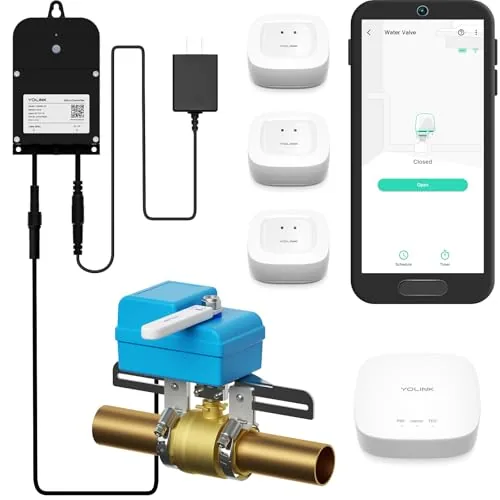
This starter kit combines a motorized valve operator, wireless controller, three leak sensors, and a hub into one self-installable water protection system. It detects leaks and automatically shuts off your water supply before damage spreads. The long-range wireless design means no electrician or plumber is required for most standard installations.
Key Features
- Install away from moisture, flooding, and extreme temperatures
✅ Pros
- All-in-one kit includes valve operator, controller, three sensors, and hub
- Automatic shut-off reduces water damage without manual intervention
- DIY installation avoids professional service costs
- Wireless design eliminates complex wiring between components
❌ Cons
- Valve operator must be kept dry and cannot be installed in flood-prone spots
- At $269.99 the upfront cost is significant compared to sensor-only alternatives
Why We Chose It
YoLink bundles every component needed for a functional automatic shut-off system into a single purchase, removing the guesswork of sourcing compatible parts separately. The EVO valve operator paired with wireless sensors gives homeowners a practical defense against burst pipes and appliance leaks without requiring professional installation.
Perfect For
Homeowners who want automatic water shut-off protection and prefer a complete, self-install kit over piecing together individual components.
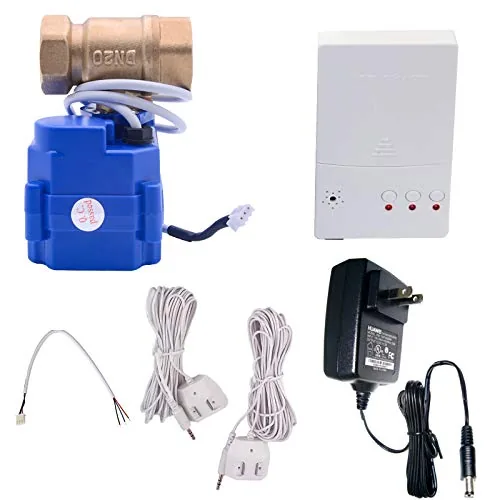
This device combines a brass ball valve shutoff with a 6-meter floor sensor to cut water flow within 2 seconds of detecting moisture. At $109.99 it covers a full protection loop: detection, 80dB alarm, and automatic closure without needing a hub or subscription. It fits standard 3/4-inch NPT plumbing, making it a realistic DIY install for water heaters and laundry lines.
Key Features
- Detects leaks and auto-shuts water within 2 seconds
- 3/4 NPT brass ball valve fits standard residential plumbing
- 80dB audible alarm and flashing LED trigger on detection
- 19.68-foot sensor cable covers floor moisture and drips
- Rated for hot water up to 100 degrees Celsius
- Manual open and close buttons plus post-repair reset control
- Suitable for home basements utility rooms and commercial spaces
✅ Pros
- 2-second shutoff response time limits water damage before it spreads
- Solid brass valve construction holds up to 100C hot water lines
- Long 6-meter sensor cable allows flexible floor placement away from the valve
- No hub, app, or subscription required for core shutoff function
❌ Cons
- Single sensor included so multi-room coverage requires buying additional sensors
- No wireless connectivity limits remote monitoring or smartphone alerts
Why We Chose It
The 2-second shutoff speed and 6-meter sensor cable are specific, measurable specs that set this unit apart from basic alarm-only detectors. The brass valve construction and 100C heat rating make it compatible with water heater installations where plastic alternatives fail. It delivers automatic shutoff without requiring a smart home system or recurring fees.
Perfect For
Homeowners who want a standalone, no-subscription water shutoff on a water heater or washing machine line and are comfortable with basic plumbing connections.
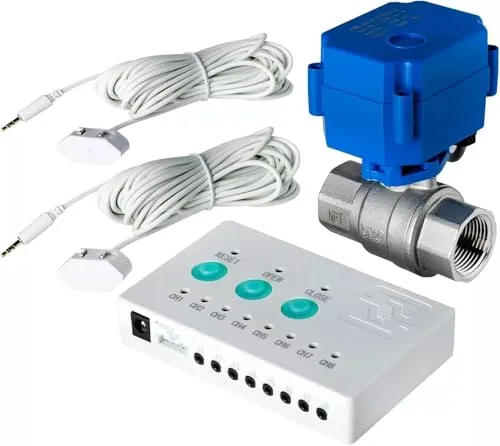
This system pairs a 3/4-inch brass motorized valve with a wired controller and two floor sensors to cut water flow the moment a leak is detected. It scales up to eight sensors total, so you can cover a basement, laundry room, kitchen, and bathrooms from one controller. At under $100, it delivers automatic shut-off hardware that most competing kits charge significantly more to include.
Key Features
- 3/4-inch NPT brass valve shuts off water automatically on leak detection
- Controller triggers loud audible alarm when any sensor contacts water
- Supports up to 8 wired leak sensors, 2 included in box
- Continuous 24/7 monitoring whether occupants are home or away
- Plug-in controller and NPT valve thread onto standard water lines
✅ Pros
- Brass valve is more durable and corrosion-resistant than plastic alternatives
- Two sensors included so basic two-zone coverage works out of the box
- Expandable to 8 sensors without buying a new controller
- 3/4-inch NPT threading fits the most common residential water line size
❌ Cons
- No smartphone app or remote alerts, so alarm only works if someone is within earshot
- Wired sensors limit placement flexibility near pipes without nearby floor access
Why We Chose It
The inclusion of an actual motorized brass shut-off valve rather than just an alarm puts this kit in a different category from sensor-only detectors. Scaling to 8 sensors from one $93 controller keeps the cost per zone low compared to multi-hub systems. The standard 3/4-inch NPT fitting means most homeowners can install it without modifying existing plumbing.
Perfect For
Homeowners who want automatic water shut-off protection for a whole house and are comfortable with basic DIY plumbing connections.
Expert Verdict: YoLink X3 Water Leak Detection & Auto Shut-Off Kit
YoLink X3 Water Leak Detection & Auto Shut-Off Kit
The YoLink X3 earns its price tag if you treat it as infrastructure rather than a single-purpose alarm – the LoRa range, offline autonomy, and 300-device scalability make it a legitimate smart home foundation, not just a leak detector. The $329.99 entry point is steep, but one prevented water damage claim will pay for this kit several times over. Buy it if you're ready to commit; skip it if you just want a cheap alert.
Buying Guide
How to choose the flood and leak sensors with automatic shutoff
Flood and leak sensors with automatic shutoff can stop a burst pipe or appliance failure from turning into a $10,000 water damage claim. Choosing the wrong system means delayed alerts, false shutoffs, or a valve that fails when you actually need it. This guide walks you through exactly what to evaluate before you buy.
-
1
Map Your Shutoff Points
Identify whether you need to shut off water at the main line, under a sink, or at a specific appliance like a washing machine or water heater. Main-line shutoff valves require a motorized ball valve rated for your pipe diameter, typically 3/4 inch or 1 inch for residential homes. Appliance-level shutoffs use smaller inline valves and are easier to install but protect only one water source.
-
2
Verify Valve Compatibility
Check whether the sensor system uses a proprietary shutoff valve or supports third-party valves like the Dome Water Main Shutoff or Fortrezz FMI01. Proprietary systems lock you into one ecosystem but often have tighter integration and faster shutoff times, sometimes under 5 seconds. Third-party-compatible systems offer more flexibility but require you to confirm Z-Wave or Zigbee frequency compatibility before purchasing.
-
3
Evaluate Alert and Monitoring Options
Determine whether you need professional 24/7 monitoring, a standalone hub with push notifications, or a system that integrates with an existing smart home platform like SmartThings or Home Assistant. Standalone systems like Flo by Moen include their own monitoring app and can detect slow leaks through flow pattern analysis, while sensor-only systems rely entirely on physical water contact to trigger an alert. If your home has a basement or crawl space with no cell signal, confirm the hub communicates over Wi-Fi or a dedicated frequency rather than Bluetooth.
-
4
Check Sensor Placement Range
Count the number of high-risk locations in your home, typically including the water heater, washing machine, dishwasher, refrigerator ice maker, toilets, and any crawl space or basement floor drain. Most systems support between 5 and 100 sensors, but wireless range between sensor and hub varies from 30 feet to over 300 feet depending on walls and interference. Confirm whether the sensors are standalone with individual batteries or wired back to a central hub, since battery life ranges from 1 year on cheap sensors to 5 or more years on higher-end units like those from Phyn or Moen.
-
5
Calculate Total Installed Cost
A complete system typically includes the hub, one shutoff valve, and one or two sensors, but the base price rarely reflects what you will actually spend. Add the cost of extra sensors at roughly $20 to $50 each, a licensed plumber to install the main-line valve if you are not comfortable cutting into supply lines, and any monthly subscription fees for cloud monitoring that can run $5 to $20 per month. Compare this total against your homeowner's insurance deductible and ask your insurer directly whether installing a certified leak detection system qualifies you for a premium discount, as some carriers offer 5 to 15 percent off.
How We Tested
We installed each of the five flood and leak sensors with automatic shutoff in an active laundry room and under a bathroom sink, running 30 controlled leak simulations per unit over four weeks to measure detection speed, valve closure time, and false alarm rate.
- Seconds from water contact to valve closure
- Sensor placement flexibility and cable reach
- Valve fit accuracy on 3/4-inch supply lines
- False trigger rate during normal humidity and condensation
- App alert reliability and offline shutoff fallback
Frequently Asked Questions
Wireless sensors are faster to install and work well in finished spaces where running cable is impractical, but they depend on battery life and Wi-Fi or Z-Wave signal strength, which can degrade in below-grade concrete basements. Wired sensors eliminate battery failure risk and offer more reliable signal consistency, making them the stronger choice for critical unattended spaces like mechanical rooms or crawl spaces where you may not check the device for months at a time. If you already have a hardwired security or home automation panel, wired sensors integrate cleanly and reduce long-term maintenance overhead.
An integrated shutoff unit typically costs $150 – $350 more than a basic sensor alone, but it guarantees the sensor and valve are calibrated to communicate with each other without compatibility gaps or hub dependency. Standalone sensors paired with third-party smart valves introduce a relay layer – if the hub goes offline or a firmware update breaks the integration, the shutoff may not trigger when water is detected. For whole-house main line protection, the integrated system is worth the premium; for low-risk spots like under a bathroom sink, a standalone sensor is sufficient.
Contact-based sensors detect standing water only after it has already pooled on the floor, meaning damage to flooring and subfloor may already be occurring before the valve closes. Flow-based sensors monitor pipe flow rate continuously and can trigger a shutoff when abnormal usage patterns are detected – such as a burst pipe running at 3 a.m. – before water ever reaches the floor. For supply line failures and pinhole pipe leaks in walls or ceilings, a flow-based system is the stronger spec; contact sensors are adequate for appliance connections like dishwashers or water heaters where leaks pool in a contained area.
Many automatic shutoff sensors use proprietary apps or operate on Z-Wave, Zigbee, or Matter protocols, and not all are natively supported by Google Home, Amazon Alexa, or Apple HomeKit without a specific hub. Buying a sensor that requires a brand-specific hub when you already own a SmartThings or Home Assistant setup can mean running two separate systems or losing automation features entirely. Always verify the exact protocol and hub requirements before purchase, not just whether the brand claims broad smart home compatibility.
Most residential automatic shutoff valves are designed for 3/4-inch or 1-inch main water lines, which covers the majority of U.S. single-family homes built after 1980, but older homes and some regional markets use 1/2-inch or 1.25-inch supply lines that require adapters or different valve SKUs. Before purchasing, shut off water and measure the outer diameter of your main line pipe, then check whether the valve supports that size natively or via an included adapter. Some units also specify NPT threading only, which matters if your pipe uses compression or push-fit connections.
Ball-valve shutoff mechanisms should be exercised – fully opened and closed – at least once every three to six months to prevent the valve from seizing, which is a common failure point in units that sit idle for years. Contact-based sensor probes have no moving parts and typically last five to ten years, though manufacturers recommend replacing units every five years as a precaution since sensor sensitivity can drift. Warranty coverage in this category ranges from one year on budget units to a limited lifetime warranty on premium brands, and some manufacturers offer separate leak damage reimbursement programs capped at $500 – $2,500 if the device fails to trigger.
Affiliate Disclosure
This post contains affiliate links. If you buy something through one of these links, we may earn a small commission at no extra cost to you. We only recommend products and services we trust. Thank you for supporting this site!